Four lines about ripe grain and a girl without a beloved. The composer Tine Bec set them for three female voices and string orchestra — and in that scoring the Prekmurje song rang out for the first time anywhere: Nika Gorič, Mojca Bitenc Križaj and Nuška Drašček with the Amadeo String Orchestra under Tilen Draksler, in the Church of St Joseph, which spent half a century as a film studio. In parallel the same song lives on a wheat field, where two girls in folk costume stand in the golden hour and the dusk, each with a solitude of her own. This is an essay about the song, the people, and a craft without compromise.
Zrejlo je žito, je žuta slama, žalostna dekla, kaj nemaš lüboga.
Some songs are so simple they seem older than the language they are sung in. Zrejlo je žito is one of them: four lines, one image, one wound. The grain is ripe, the straw has turned yellow — and a girl is sorrowful, because she has no beloved. Nothing else happens. The entire drama of the song lies in this: that nature ripens while a person remains alone; that summer runs out into autumn, and the swallow is about to fly away. Prekmurje, Slovenia's far eastern province beyond the Mura river, has sung it for centuries, and in all those centuries it has not lost a gram of its weight.
I wanted to hear it as no one has heard it before. The composer Tine Bec has written an arrangement for three female voices and string orchestra — and in this scoring, with three singers of this calibre and a full body of strings beneath them, the song rang out for the first time anywhere. Nika Gorič, Mojca Bitenc Križaj and Nuška Drašček — three singers whom audiences know from opera stages between London and Ljubljana — stepped up to the music stands in the Church of St Joseph in Ljubljana, behind them the Amadeo String Orchestra under Tilen Draksler. And in parallel, the same song came to life a second time, in an entirely different world: on a wheat field in the first golden light of the day, where it was carried in body and face by Ana Grgić and Anja Gale, two young women in Prekmurje folk costume, each with a solitude of her own.
This essay is the story of both — the song and the film. But because Zrejlo je žito is not merely a melody but a door into a whole world — into the Prekmurje melos and its thousand-year melancholy, into the question of what a folk song becomes in the hands of a schooled composer, and into a remarkable building that spent half a century as a film studio before becoming a church again — it is also the story of all of that. And of the craft: of the BRAW format, cinema lenses, dollies, jibs and cable cams, with which we do something almost nobody does for classical music any more. But one must begin, as always, with the song.

Four lines, one wound
The text is built the way folk songs love best: on parallelism. First nature — ripe is the grain, yellow the straw —, then the human being: sorrowful girl, why have you no beloved? That kaj is not a causal conjunction but a question word; the line reads as a question, almost a reproach. In the second stanza the harvest continues — zrejlo je zeldže, je žuto lišče: ripe is the cabbage, yellow the leaves — and so does the sorrow. Then comes the refrain, the loveliest thing of all: an address to a swallow. Sejdi tam sejdi, las'vica moja — sit there, sit, my swallow; do not fly away yet. Whoever begs a swallow to stay is begging summer not to end; and everyone who has ever heard the refrain knows the swallow will not listen. The later stanzas say the rest: the beloved has gone f tuji kraj, to a foreign land, and will not come back; and there will come a year, and winter, and autumn. The departure this song mourns is the most Prekmurje departure of all — abroad, for bread, with no promise of return.Notations and the song's journey
The scholarly anchor is the notation of Josip Dravec, who included the song in his great collection Glasbena folklora Prekmurja, published by the Slovenian Academy of Sciences and Arts in 1957 — the cornerstone of everything we know about the music of the region. Zmaga Kumer, the grande dame of Slovene ethnomusicology, wrote about it as well, and the Institute of Ethnomusicology at ZRC SAZU counts it among the best-known Prekmurje songs of all, including it in the sound edition Spejvaj nama, Katica, devoted to the folk songs of Prekmurje. From there the song has travelled through every imaginable pair of hands: Vlado Kreslin recorded it with the Beltinci Band in 1992 on Spominčice and carried it into every Slovene home; the band Katalena sang it; choral masters from Stojan Kuret to Ivan Florjanc arranged it; Rok Golob dressed it in symphonic clothes for Sabina Cvilak and the Slovenian Philharmonic Orchestra. Each of these versions took the song somewhere new — and, remarkably, none of them damaged it, which for a centuries-old melody is rare, and proof of how solidly it is built. A melody that survives so many hands is no fragile antique; it is a tool polished by use. Bec's arrangement is the first to bring it to three operatic voices and a string orchestra at once — and that is the scoring we filmed.The Prekmurje melos
Why does the song of Prekmurje stand apart from everything else Slovenia sings? Ethnomusicology has precise words for it. Valens Vodušek, in a study of pentatonicism published in the journal Traditiones in 1990, showed that the oldest layers of Slovene folk song conceal a five-note scale — and that it is precisely the country's east where those archaic layers are best preserved. Prekmurje part-singing runs in parallel thirds and sixths; the upper voice is called na mladou, the younger way, the lower na starou, the older way, and in places the lower voice breaks free into fourths and fifths — the residue of an older style of singing still. To this belongs the sound of the cimbalom, to which the song was often sung, and a dialect that is music in itself: soft, drawn-out, full of diphthongs that standard Slovene does not know. But technique is only half the answer. The other half is a posture: Prekmurje lyricism is melancholy without pathos, sorrowful without tears. Flat land, flat melody, flatly spoken pain. Nothing breaks and nothing cries out; everything endures. That is exactly what Bec heard in the four lines — and exactly what we were not allowed to touch.
The composer
Tine Bec was born in 1993 in Brežice and belongs to that rare breed of musicians who walked through every room of the house before choosing the one to live in. At the Conservatory of Music and Ballet in Ljubljana he first graduated in music theory and composition, two years later in piano, and completed a degree in solo singing besides — a composer who has himself stood on stage as a singer, and it shows in every bar he writes. At the Academy of Music in Ljubljana he took his composition diploma in 2016 under Jani Golob — a master who spent his own life weaving the folk and the art traditions together — and a master's degree in music theory pedagogy.
His everyday life is made of the human voice. He works at St Stanislav's Institution in Ljubljana as choirmaster, répétiteur and teacher of vocal technique; he leads the children's choir of the Alojzij Šuštar Primary School, with which he won a gold award with distinction at the national competition in Zagorje as a debutant conductor, taking the prize for best debutant choirmaster himself. He has been assistant to Ambrož Čopi and to Stojan Kuret — two names around which Slovene choral music of recent decades practically defines itself. In 2019 his Deliver me, o Lord won the competition for new choral works at the Aegis carminis festival; he is a recipient of the Conservatory's Škrjanec Prize. His catalogue already runs past a hundred works — from four masses (among them the much-performed Missa pro Juventute) to arrangements of Slovene folk and art songs, orchestral scores, and a Piano Concertino premiered with the Orchestra of the Slovenian National Opera and Ballet Theatre in Ljubljana.
When Bec talks about composing, he does not talk about notes; he talks about language. A thought of his from a radio interview could stand as the motto over this production: he often senses the power of a language — not the meaning of its words, but their melos, which dictates a particular musical expression. The Prekmurje dialect is melos in its purest form; the song he took into his hands is already half a score. His task was not to decorate it, but to listen to it all the way to the end.
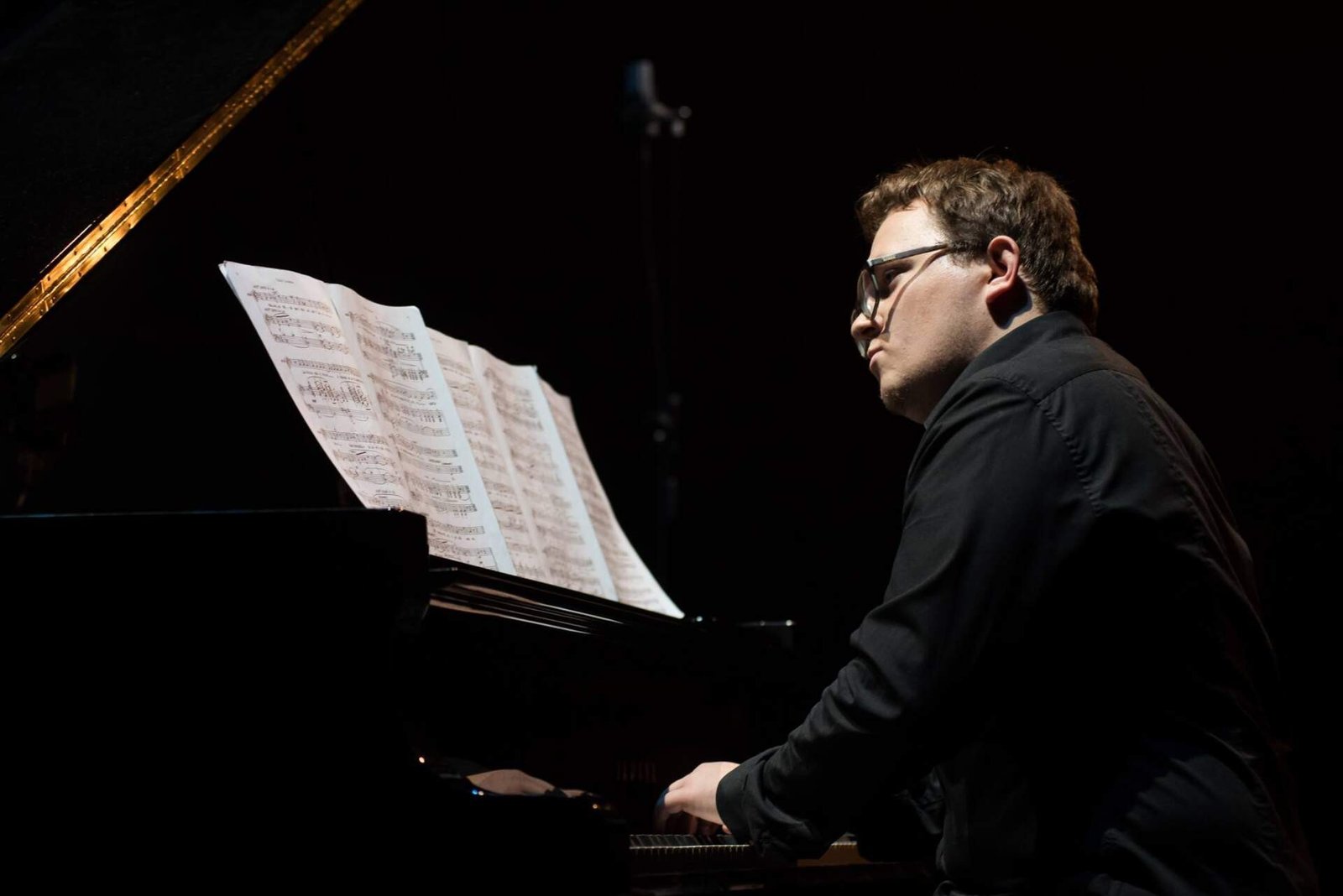
I often sense the power of a language. It is not about the meaning of the words — I mean their melos, which dictates a particular musical expression.Tine Bec, in conversation with Radio Ognjišče
The arrangement
Bec's score is marked Adagio ma non troppo and keeps that promise like a vow: slowly, but not too slowly — the pace of a person walking through ripe grain. The three female voices in it are not three soloists taking turns to shine but a single voice spread wide: the melody passes from throat to throat, doubles itself in thirds the way Prekmurje part-singing doubles na mladou and na starou, and gathers back into unison whenever the words demand that the world stand still for a moment.
The strings beneath them do what a string orchestra does better than any other body: they breathe. The twenty-nine-bar central section is the heart of the arrangement — there the song opens into a breadth the four lines alone could never reach, and there Bec shows that he has listened to the silence between the stanzas, not only to the stanzas. He builds the climax with the simplest and most beautiful device an orchestra owns: the strings, which until then have been plucking, pizzicato, like raindrops on a roof, take up their bows — and the same notes that were dots become lines. The moment pizzicato turns to arco is, in the film, precisely the moment dusk defeats the golden hour over the field.
And then the ending. No cadence, no triumph. The song runs out into a triple pianissimo on the syllable ti — the last word of the refrain, with which the girl begs the swallow to lean close, to stay. The music does not answer whether the swallow stayed. It simply goes out, the way the light goes out over a field.
One more thing must be set down about what the word first means here. The song is centuries old and many have sung it; but in this form — three operatic voices of this calibre and a string orchestra, Bec's score complete — it had never sounded anywhere. A premiere of a folk song looks like a contradiction; in truth it is exactly what a folk song has always done: it is born anew at every singing, in new throats, with a new memory. Our task was only to make sure that this new memory was recorded in a way that will last.
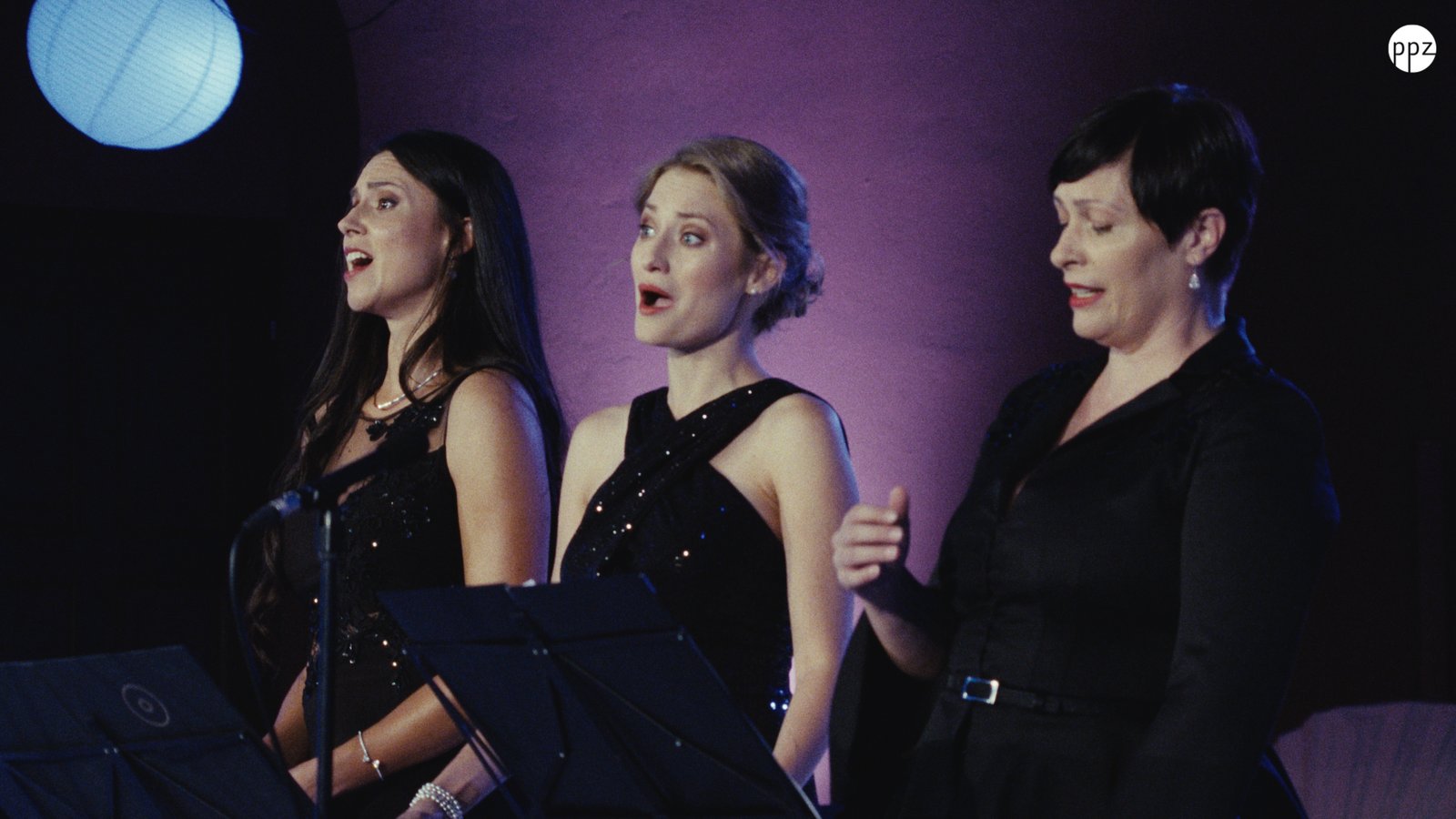
Three divas
I use the word diva deliberately and without irony. Each of the three singers of this production could carry a full evening alone in any hall between Ljubljana and London; that they agreed to stand together at three music stands of the same folk song was a privilege of the kind one does not forget.
Nika Gorič is a soprano whose path led from her native Maribor through Graz to the Royal Academy of Music in London — a master's degree, a doctorate in performance, and the two highest distinctions the school can give: the Regency Award and The Queen's Commendation for Excellence as the best student of her year; in 2019 the Academy made her an Associate. She has sung Titania at the Salzburg Festival's Young Singers Project, Gilda with Scottish Opera, Ginevra in Handel's Ariodante with Il Pomo d'oro, appeared at Garsington Opera and sung Mahler's Fourth in Paris and London; her concert career has taken her from the Berlin Philharmonie to the Sydney Opera House, while the home stages of Ljubljana and Maribor know her as Adina, Pamina, Euridice. Critics describe her as a mistress of transformation, a singer to whom no style is foreign. In this production hers is the voice that carries the light — the upper line, the one na mladou.
Mojca Bitenc Križaj is a soprano with a biography that makes you look twice: alongside her singing she completed a degree in medicine at the Ljubljana Faculty of Medicine — and then chose the stage. She took her master's at the Academy of Music in Ljubljana in the class of Barbara Jernejčič Fürst and finished her postgraduate studies summa cum laude in Zagreb with Vlatka Oršanić; she has worked with Brigitte Fassbaender and Edda Moser. Her record includes first prize at the Lav Mirski competition in Osijek and the awards for best soprano and best Mozart interpretation in Deutschlandsberg; she has sung with the Vienna Symphony Orchestra, at the Bregenz Festival before an audience of seven thousand, and with the orchestra and choir of the Slovenian Philharmonic. A celebrated soloist of the Ljubljana Opera, she is its Violetta, Donna Anna, Pamina, Micaela, Nedda and Manon Lescaut. Her voice is the core of this arrangement — warm, patient, the one that holds the third.
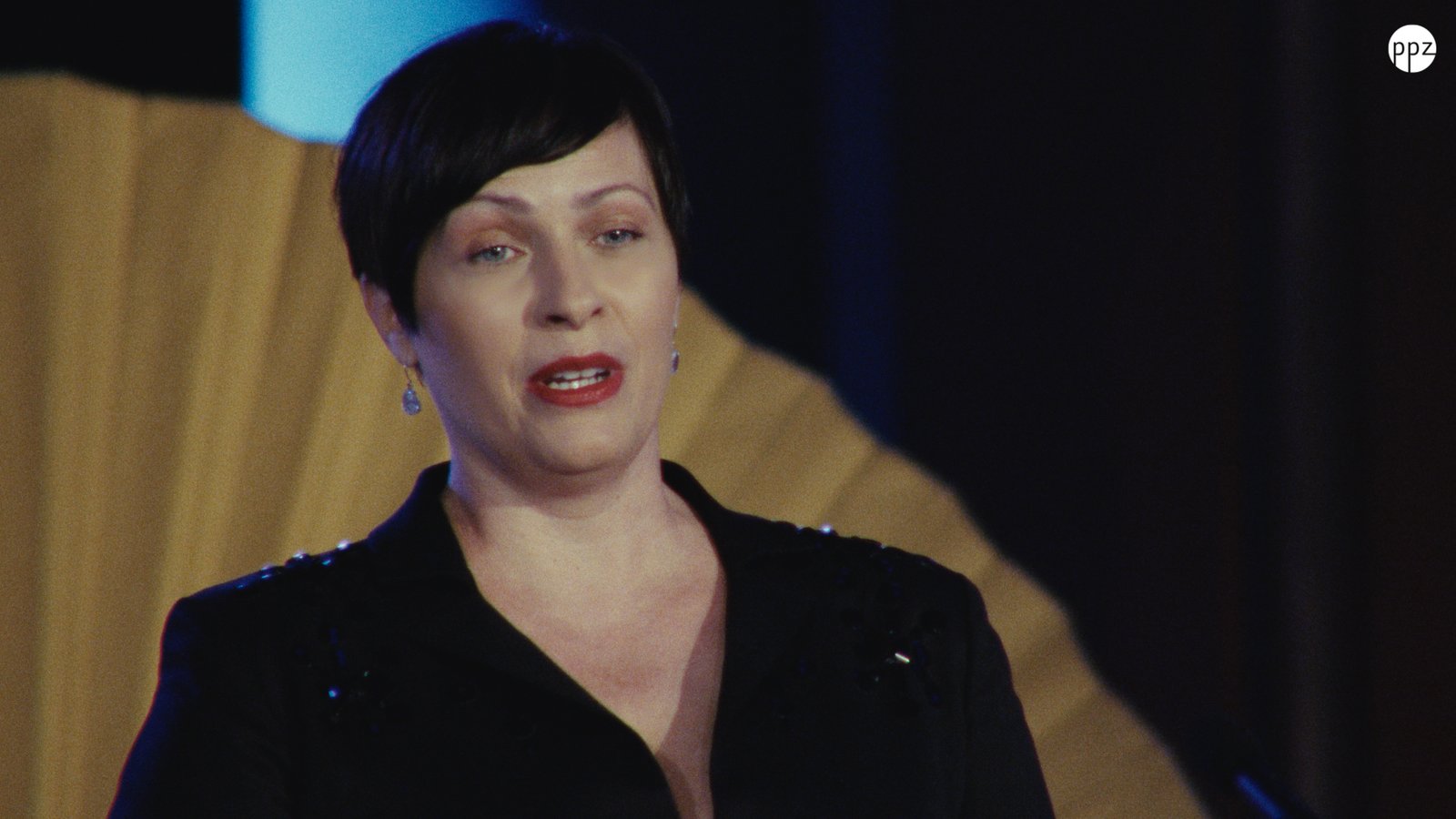
Nuška Drašček is a story of her own: principal soloist of the Ljubljana Opera and a mezzo-soprano to whom the state awarded the Prešeren Fund Prize for 2024 — the highest recognition a Slovene artist can receive for the work of recent years. Born in Trbovlje, raised in Radeče, she first came to wide notice back in 2004 by winning a television singing competition, and has since travelled a road almost no one else can: from musical theatre and chanson to opera, oratorio and cantata, from Piaf to Verdi, without ever once sounding like a guest. Her voice in this arrangement is the earth — the lower line, na starou, the one out of which both sopranos grow.
Three trained voices singing a folk song risk exactly one thing: that the song will sound like a museum visit. These three walked around the trap by putting the whole apparatus down — no operatic vibrato at any cost, no contest of voices. They listen to one another the way village singers do. Only that the villages these three come from are the concert halls of Europe.
One more thing makes this session singular: these three singers had never before performed in this constellation. Three leading solo voices, each used to a stage of her own, had a few hours to tune themselves into a single instrument — without ego, without reserve. That it happened so quickly and so naturally is the credit of their musicianship and of Draksler's calm hand; that it was recorded is our good fortune.
She moves with the greatest of ease from opera, oratorio and cantata to art song, from folk song through popular music and French chanson to the musical — beyond any doubt one of the most prominent, deservedly most sought-after and above all most versatile of singers.From the citation of the Prešeren Fund Prize awarded to Nuška Drašček, 2024

A vow after the earthquake
The Church of St Joseph in Ljubljana's Poljane district is a child of disaster. After the great Ljubljana earthquake of 1895, the Jesuits conceived a sanctuary to serve as the centre of the so-called earthquake devotion — an annual remembrance of the night the city shook. They bought the land in 1894; the foundation stone was blessed on 4 August 1912 by Bishop Anton Bonaventura Jeglič, and by 1914, to the designs of the Viennese Benedictine architect Anselm Werner, a building of superlatives had risen: at 68.5 metres it is to this day the longest church of the Ljubljana archdiocese, with its largest dome and its second-tallest belfry. Then history promptly bared its teeth: during the First World War the church served as a barracks for two hundred soldiers and afterwards as the city's food warehouse; it was fitted out for worship, provisionally, only in 1922.Plečnik and the acoustics
In the twenties and thirties Jože Plečnik entered the story. Beside the Jesuit residence he designed, in 1925, the first retreat house in Slovenia; and in May 1941 — in the middle of a war — the mighty high altar of dark Podpeč marble was raised to his designs, with a statue of St Joseph by the sculptor Božidar Pengov. And one detail touches our recording directly in the heart: the chroniclers note expressly that Plečnik laboured over the acoustics of this enormous nave. The space in which we placed our orchestra is, in other words, acoustically considered by the master himself — a long, tall, marble reverberation that does not swallow a voice but carries it.A film before the altar
Then comes a turn no screenwriter could improve. In 1949 the socialist authorities nationalised the church; the fathers carried the Blessed Sacrament to the cathedral, and into the nave moved the first Slovene film studio — Triglav Film, and after its bankruptcy in 1966, Viba Film. Plečnik's altar was walled in — and the walling-in saved it. For half a century, film sets, lights and cameras stood between these columns; a good part of Slovene film history was shot inside a consecrated nave that was not allowed to say so. The studio moved out only in the nineties — sources give either 1991 or 1995, and the discrepancy belongs to the story —, and at Easter 1996, on the eve of Pope John Paul II's first visit, the church was returned to the Jesuits. After a thorough restoration it was consecrated anew on 5 November 2000, with a chronicle recording some two and a half thousand people at the ceremony. In 2006 Metod Pevec made a documentary about all of this, with a title that says everything: A Film Before the Altar.The circle closes
Today the church is again what it set out to be — and something more: a space that music has fallen in love with. It hosts the international choral series Plečnik in a cappella; recording crews return to it for an acoustic no studio can manufacture. And now the reckoning that cannot be overlooked: into a church that spent half a century as a film studio, we brought a film crew — to record music. The cameras returned beneath the dome, but this time not in place of worship; in the service of a song about longing. Our gratitude for hospitality and trust goes to Father Damjan Ristič and the Jesuit community of St Joseph; without them this production would not exist. When the three singers first sang into the acoustics Plečnik once laboured over, one thing was clear: the space is not a set. The space is the fourth voice.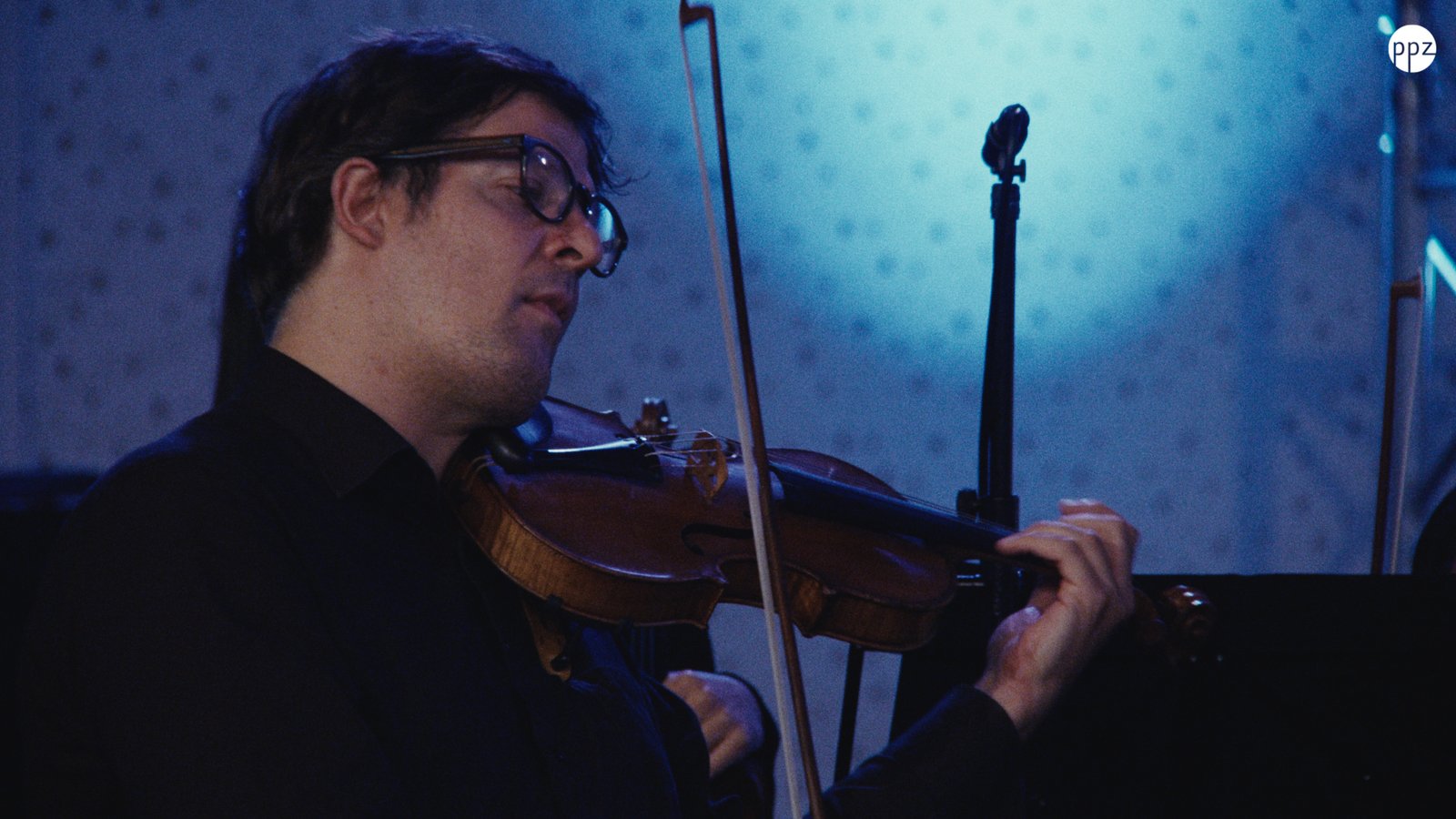
The orchestra and the conductor
The musical body of the production is the Amadeo String Orchestra. Founded in 2013, it is by design exactly what such a recording needs: young, hungry and without routine. Its desks are filled by students and graduates of the music academies of Ljubljana, Graz, Klagenfurt, Detmold and Zagreb, together with members of the RTV Slovenia Symphony Orchestra; the ensemble was conceived as a springboard for young professional musicians and as a place where music joins hands with the other arts. For a song that needs breath rather than parade, such a roster is ideal — a string player who has not spent a hundred years on the same phrases listens differently.
It is led by Tilen Draksler, a conductor with a road behind him of a kind this country does not produce often. He took his piano diploma at the Academy of Music in Ljubljana and continued at the Liszt Academy in Budapest; his master's degree in orchestral conducting he completed with distinction under George Pehlivanian at the Katarina Gurska Academy in Madrid. Since 2019 he has been the maestro's first assistant, and in 2023 he became assistant conductor of the Armenian National Philharmonic — a musician who, between seasons from Madrid to Yerevan, keeps coming home to found orchestras and festivals. Amadeo is his; with it he also created the festival of the same name. His conducting of this song was above all an art of withholding: through the twenty-nine bars of the central section he keeps the orchestra on a single breath that must never spill into pathos. Under his hand, Amadeo does not accompany — it takes part: the strings listen to the singers the way the singers listen to one another.
The recording day
Recording music in the Church of St Joseph begins long before the first bar. A space with Plečnik's reverberation is an instrument that has to be tuned: the golden acoustic fans behind the singers — the spatial design of Tatjana Kortnik — are not scenery but sound tools, shells that return the voices towards the orchestra and the microphones, while catching, for the camera, that warm light which in the blue of the nave burns like a fire in the cold. The microphone placement by Studio Klopotec sought the balance that is everything in this music: close enough for the words to keep every dialect syllable, far enough for the score to receive the space its composer intended. Boris Rener and Danilo Ženko stood at the microphones, Iztok Zupan at the mastering desk — the team that has watched over the sound of our productions for years, and that knows a church acoustic is not to be defeated but listened to.
Then come the voices. The moment three singers of this calibre first sing together in an empty church is, of all the moments of a production, the hardest to describe and the easiest to film: all the camera has to do is not disturb. We recorded long, complete performances, not a jigsaw of bars — with a song that lives on line and breath, perfection cannot be glued together from pieces. Visually we lit the nave the way the audience of our productions has come to expect: blue light between the columns, golden fans, lanterns in the depth of the frame. Anyone who has seen our Ochi Chornye will recognise the setting — it was filmed in the same nave — and that continuity is part of the idea: the Church of St Joseph is becoming our standing musical home, a space with a recognisable light to which we return with new scores.

The dialect before the microphone
A chapter of its own in the preparations was the dialect. Prekmurje speech is not this song's ornament but its other half: take away the ü in lüba, the soft žuta and the drawn-out zeldže, and the melody loses its colour the way a film frame loses its red. So we approached the words as a score. Every word was parsed: zeldže is cabbage and not some mysterious plant; las'vica is the swallow with a swallowed vowel, dropped the way a tired voice drops it; and that kaj in the line kaj nemaš lüboga is an interrogative — why have you no beloved — not a causal conjunction, which changes the whole tone of the verse from statement to compassion.
For trained singers, dialect is a trap of a particular kind. Operatic diction teaches open, rounded vowels and ringing endings; Prekmurje speech wants the opposite — narrow, dark vowels, softly swallowed consonants, word-endings that dissolve into breath. All three singers had to set part of their schooling aside for this song and learn a pronunciation none of them carries from home. That not a trace of the effort can be heard on the recording is perhaps the greatest of this production's invisible achievements: the dialect does not sound like homework; it sounds like a mother tongue. And so it must — for the song goes out into the world with subtitles in forty-three languages, but it will only ever sound in one.
Nasloni se, lujba, na mo pleča ti.
The wheat field
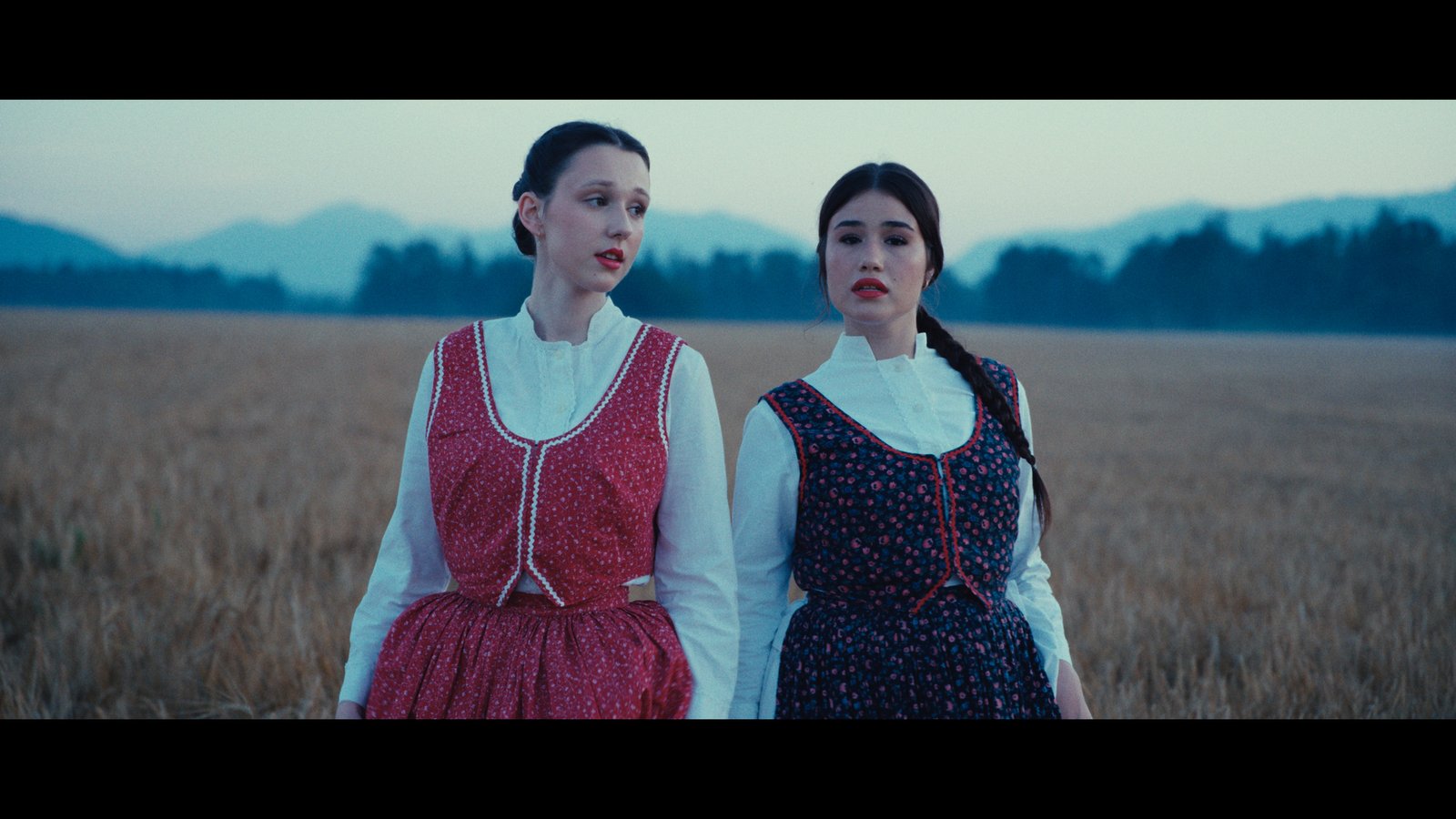
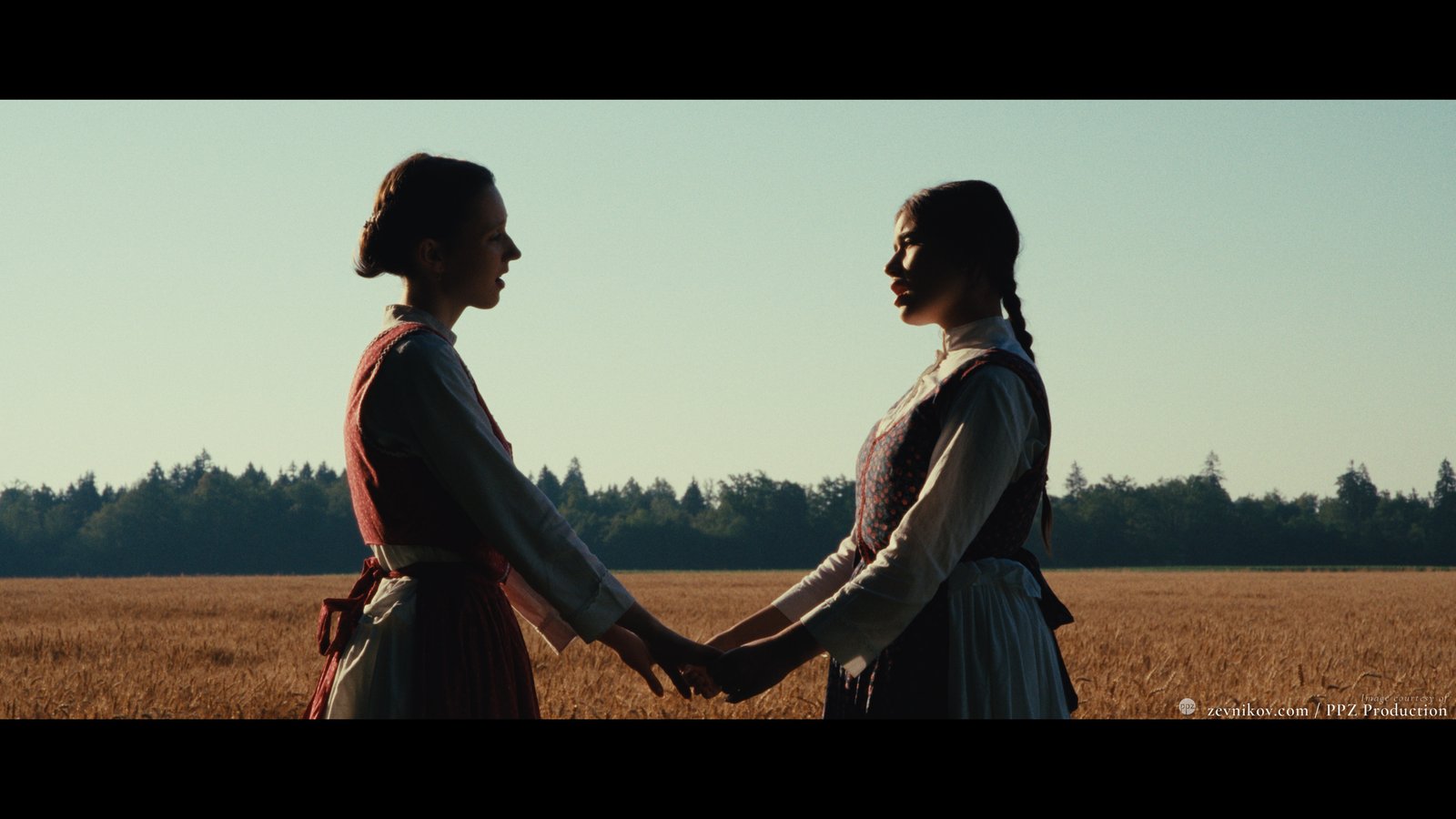
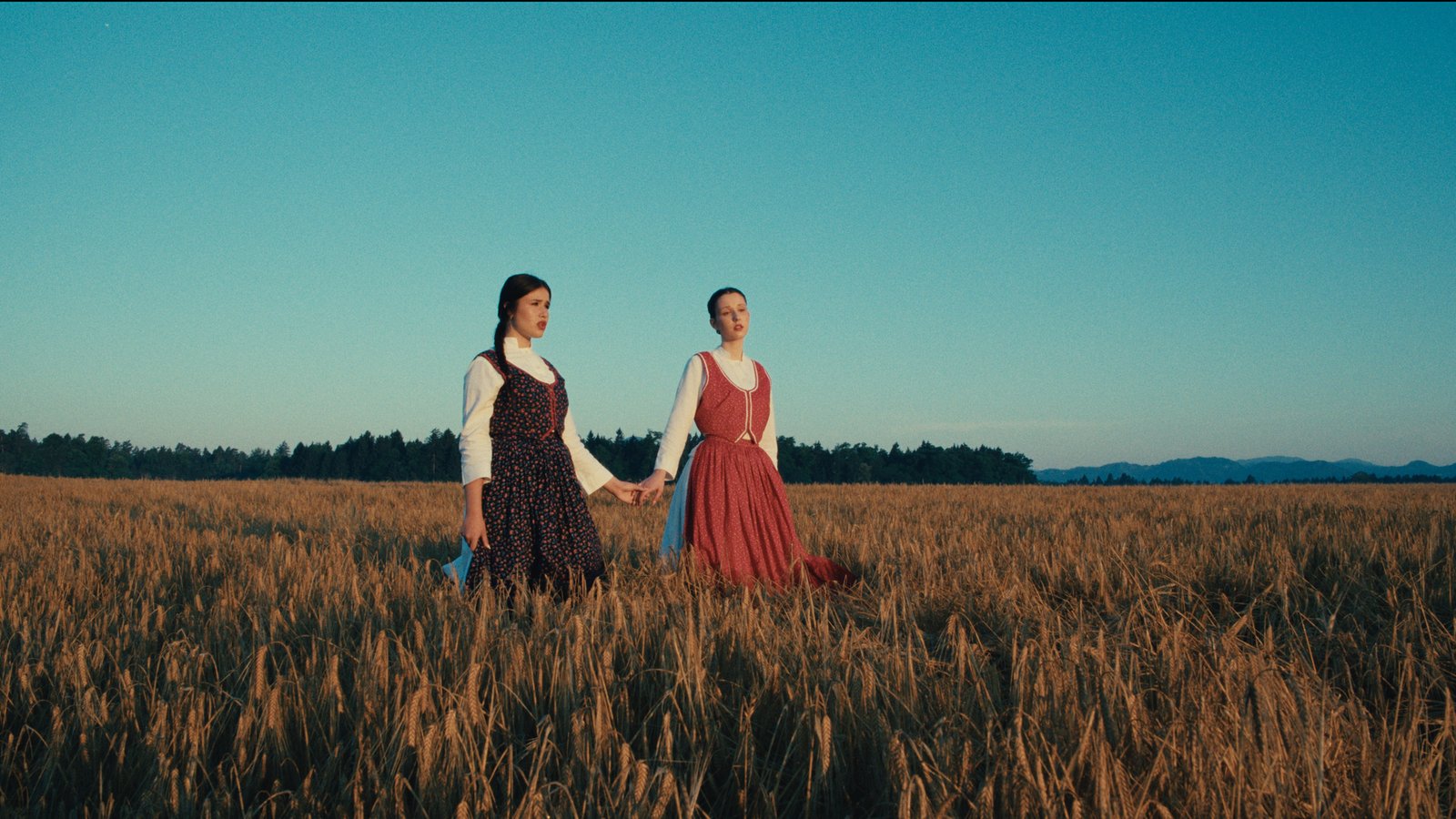
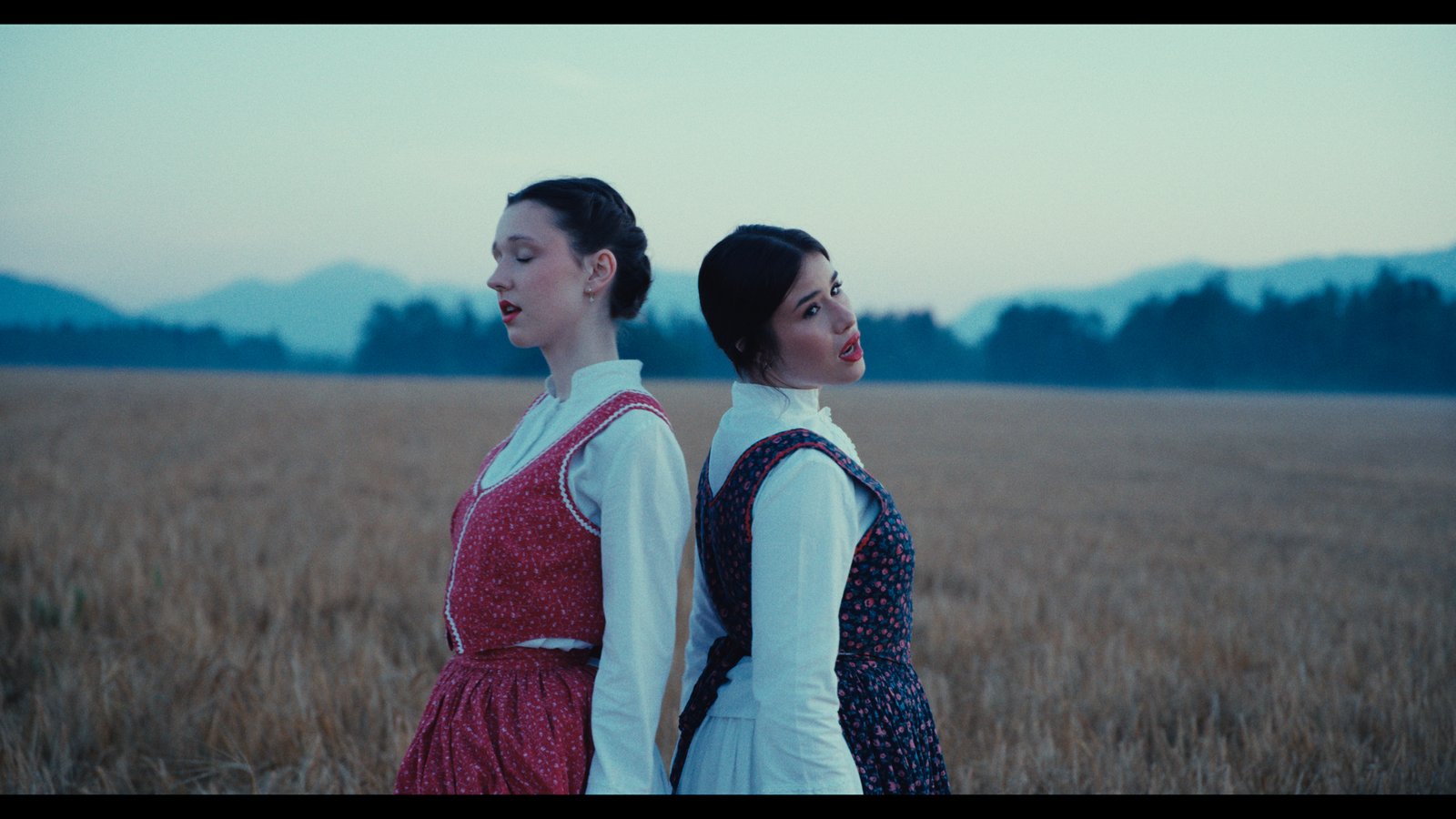
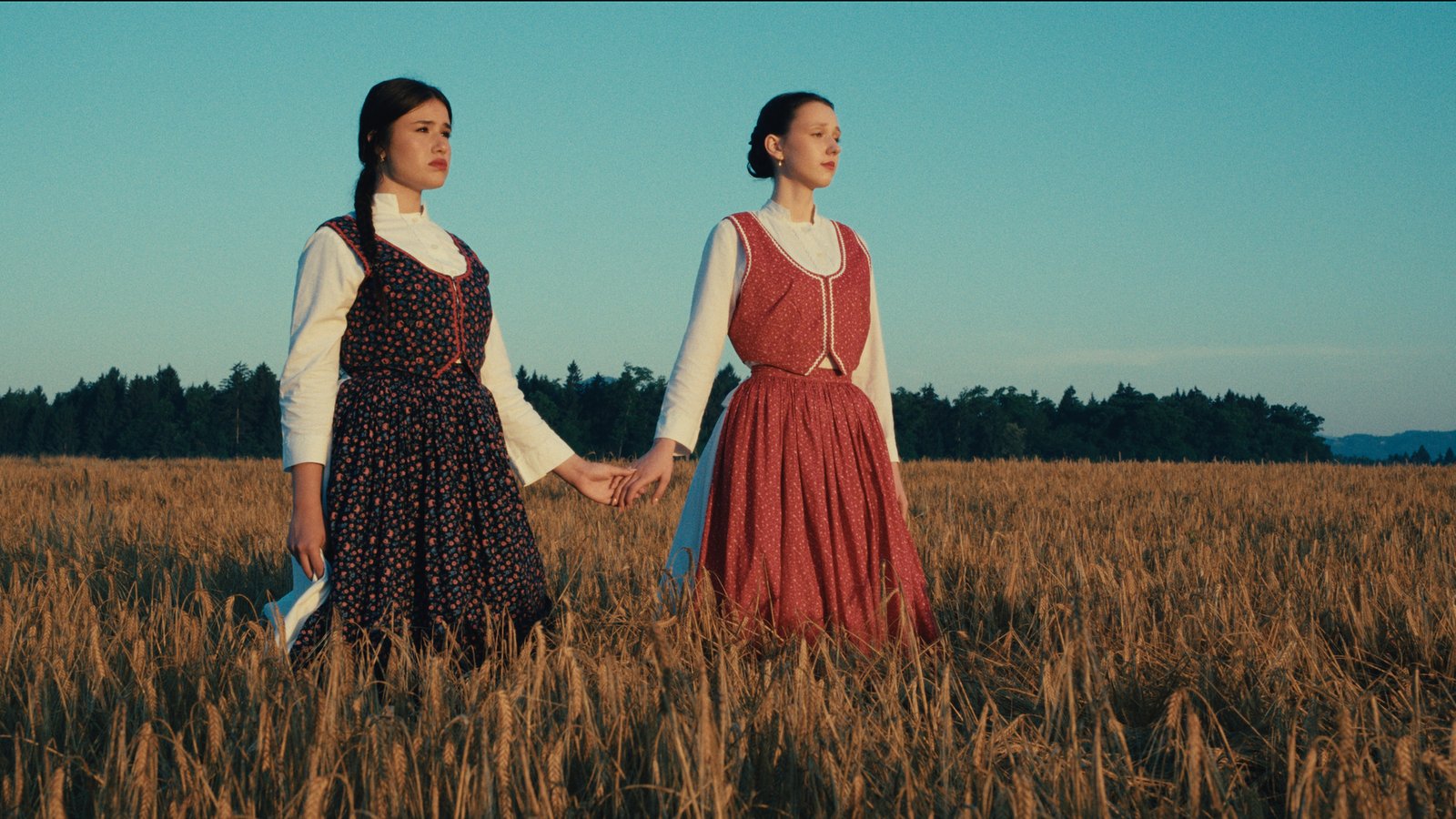
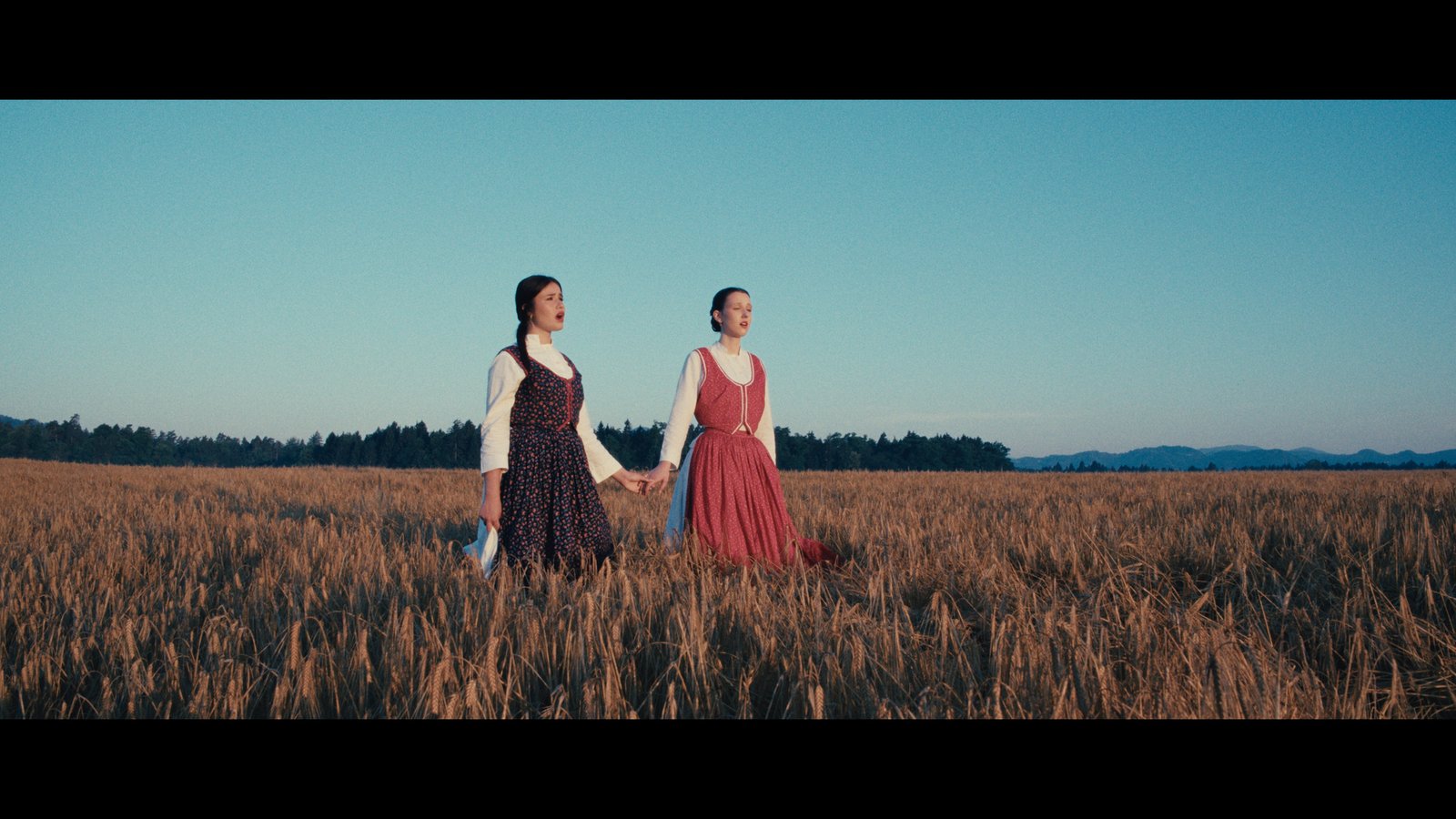
The other half of the film knows neither orchestra nor church. On a wheat field beneath the mountains stand two young women in Prekmurje costume — Ana Grgić and Anja Gale. Both belong to the wider school family that has stood behind our productions for years: on Ochi Chornye they were part of the Gimnazija Kranj technical crew; this time they stepped in front of the camera for the first time — and they carry the film as if they had always done so. They perform what the song is silent about. And it matters to say what we did not film: neither of them is a consoler. When they take each other's hand, they are not comforting one another — each is holding her own solitude, and that is exactly what makes the grip so heavy. The song knows no happy ending, and the film did not invent one.
The costumes they wear were prepared by Marija Šenk, a master who knows that folk dress before a camera is not a costume but a document: the patterned bodice, the white blouse, the ankle-length skirt, the heavy braid over the shoulder. The white linen performs one more, purely cinematic duty: white cloth is the finest reflector nature has ever made, and in the first light of day it returns to the faces a soft glow we would otherwise have had to steal with lamps — which, on principle, we did not bring to the field. We shot at dawn, in the first days of July: a wake-up in the middle of the night, the blue hour around half past four, the golden hour from half past five to half past six. The film lays those two lights in the opposite order, the way the stanzas of the song run: first the golden hour — a low sun that turns the grain to glowing metal and skin to honey; the world of ripeness. Then the blue, when the colours go out and only silhouette and sky remain; the world of the winter the song still has coming. The morning we filmed runs through the film as an evening — from full light towards farewell; nature gave us a dawn, and the song demanded a dusk. The passage between them is not a cut but a slow cooling — precisely where, in the score, pizzicato passes into arco.
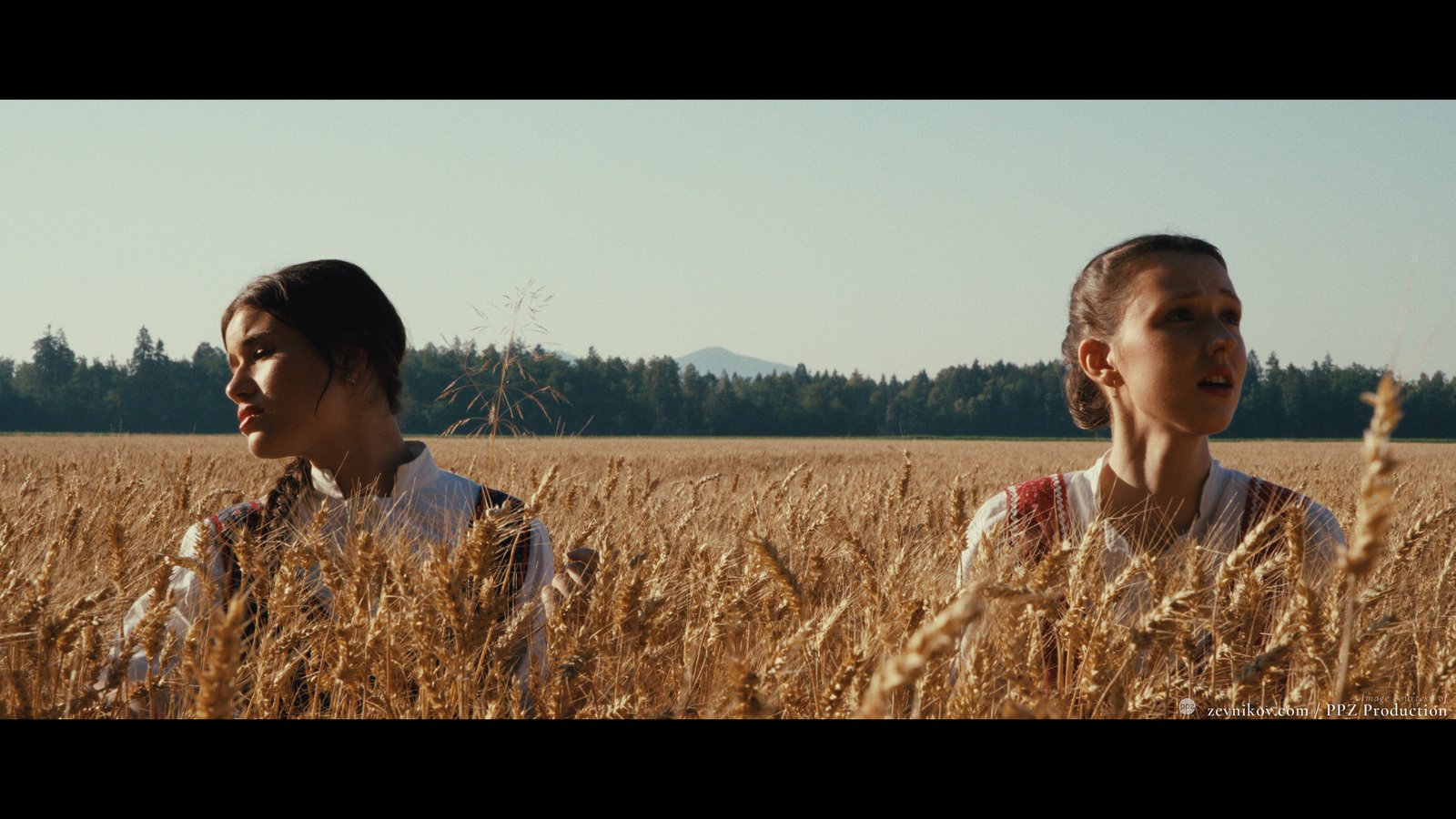
A day in a field has rules that cannot be overruled. The golden hour waits for no one, and each morning holds exactly one sequence of shots; the grain may bend only once, because a second pass already shows the first path; and an August field has its own deadline — the harvest does not consult a shooting schedule. Our gratitude for support goes also to Iskraemeco, which stood by the production. The hardest shot was also the simplest: a hand in a white sleeve moving through the ears of grain. We filmed it in macro, in the blue hour before sunrise, and the whole song is inside it — the touch of something ripe that cannot be held.


Two worlds, one film
The film, then, lives in two worlds that never meet inside a single frame — which is exactly why they meet inside every cut. The church is the world of sound: blue light, golden fans, bows, throats, Plečnik's reverberation. The field is the world of the body: grain, wind, walking, a hand in a hand. The church sings, the field is silent; and the music from the church is the only voice the field has at all. The girls in the wheat never open their mouths — three singers thirty kilometres and a whole world away sing in their stead, and yet the field seems to hear every word.
This doubleness is not a director's conceit but a faithful translation of the song. A folk song always lives twice: once as a melody that someone sings, and once as a story that happened to someone. The church is the melody; the field is the story. The colour dramaturgy follows the same logic: the field begins in gold and ends in blue, while the church is blue from its first frame — as though the field were travelling towards the church for the whole film, the golden hour towards dusk, ripeness towards farewell. In the edit the two worlds alternate on the phrase: when a voice reaches upward, we are with the singers; when the phrase dies away, we are back in the grain. The viewer should never notice this — but must feel that the two are breathing together.
A single element passes between the worlds: light the colour of gold. In the field it is the sun; in the church, the fans. When at the end of the film the field cools for good into blue, the gold remains only behind the singers — as if summer had been carried off the field and into the music, the one place it can survive the winter.

A land of leaving
The line about the beloved who went f tuji kraj — to a foreign land — and will not come back is not a poetic figure; it is social history in a single sentence. Prekmurje was for centuries a land people left: seasonal labourers to Hungarian and Austrian fields, later emigrants across the ocean, and between them the wars, which took the young men and returned them rarely. Whoever stayed behind, waited — and waiting is the mother of all great lyric poetry. That is why Prekmurje songs sing so often of distance, of letters that do not come, of wreaths that wither: Vsi so venci vejli — all the wreaths have withered — is in truth a sister of our song, the same wound in another image. The melancholy that ethnomusicologists describe in technical terms has a perfectly simple cause: these are the songs of people who truly said goodbye.The harvest and love
That a song about loneliness speaks precisely through the harvest is no accident. In the old peasant year, the harvest was the season when the whole village stood in the same field — the season of the young working side by side, of glances across the swath, of songs the reapers passed to one another over the grain. That is why so many Slovene harvest songs are at the same time love songs: the field at harvest was what the dance floor would become later — the place where looking was allowed. A girl standing alone in the middle of a ripe harvest is thus, in the song's eyes, doubly deprived: everything around her has borne fruit, and no one has looked across the swath at her. The ripe grain is not the backdrop of her sorrow; it is its measure.The swallow
And why a swallow, of all birds? Because it is the only bird that leaves and returns to the same nest. The peasant world held it to be the luck of the house — a nest under the eaves was never knocked down — and the swallows' departure was a calendar: when the swallows go, summer is over. The girl who begs the las'vica in the refrain to sit a while yet, not to fly away, is therefore not begging a bird — she is begging time. One more week of summer, one more day of hope that the one in the foreign land might yet return the way a swallow returns. Here lies the whole genius of the folk text: the greatest plea is addressed to the smallest creature, because a person does not dare utter a larger one.Longing as a Slovene measure
Slovene art has a word for this feeling that other languages must learn descriptively: hrepenenje. It is not quite sorrow and not quite desire — it is a desire that knows it will not be granted, and refuses to go out all the same. Ivan Cankar built his prose upon it; the folk song knew how to say it a hundred years earlier, and in four lines. Zrejlo je žito is hrepenenje in its purest state: nothing happens, nothing resolves — it only ripens, and aches. Perhaps that is why this small song has outlived every fashion: it sings of the one thing that does not age.
A film aesthetic without compromise
Now the craft, because too little is ever said about it. The classical-music productions at zevnikov.com are made with a single ambition: to make the finest classical music production in the world — without compromise. That is not a marketing sentence but a working principle, and it can be verified in any frame: no shortcut that could have been avoided, no decision taken because the alternative was too expensive or too slow. On screen, classical music habitually receives the cheapest possible treatment — static cameras, television lighting, a recording of a concert instead of a film. We do the opposite: we give the music the entire cinematic apparatus that cinema itself receives.
In practice this means three things. First, capture: we shoot Blackmagic RAW, the uncompressed-in-spirit format that keeps everything the sensor saw — every gradation in the shadows of the grain, every shade of dusk. BRAW knows no baked-in decisions; colour, contrast and light remain open until the last day of post-production, which is priceless in music, where the dramaturgy of light is built in the edit, against the score. Second, glass: in front of the sensor are cinema PL lenses — optics of cinematic lineage, with a gentle rendering, a noble fall-off of focus, and that plasticity of faces which makes the portrait of a singer look painted rather than photographed. Third, the colour chain: the final image is built through Filmbox with an emulation of Kodak Vision3 film stock — 50D for the sunlit field, T500 for the dark church. Hence the grain, the breath and the colour character of analogue film; the golden hour over the wheat does not look like a photograph from a good camera, but like a frame from a cinema.
The fourth pillar is movement. With us the camera is not an observer on a tripod — it is a dancer inside the score. Behind the lenses stood Jan Eržen, Maj Vreš and Tevž Smolnikar with the camera operators of TAJUS Production. Aljaž Žavrlan's dolly for the slow, motivated moves at the height of the grain; the jib for those lifts when a frame tears itself off the ground at a crescendo; the cable cam and remote head in the hands of Gašper Gorenak — a wire along which the camera glides across the field or down the nave in one long breath no other machine knows; and the drone for the view only the sky has — two figures in the wheat, small as notes on an empty stave. Each of these machines is on set because a particular bar of the score demands a particular movement; none of them is there for decoration.
The fifth pillar is the relation of sound to image. The music was recorded in the church for real — singers and orchestra together, in Plečnik's acoustics, under the microphones of Studio Klopotec —, while the field was shot silent: no clapperboard, no shouting, only wind and instructions by hand. In the finished film, the music from the church is the single acoustic truth of both worlds, and that is why no cut is ever dictated by the picture, but by the phrase. The rule I repeat on every music film holds here as well: you cut on the phrase, not on the bar. A cut on the beginning of a musical thought is felt as a breath; a cut through the middle of a melody as a stumble, even by a viewer who does not know why.
And the pillar that is not technical yet carries everything: discipline. An aesthetic without compromise does not mean opulence; it means renunciation — of everything that is merely pleasing, and of everything that is merely possible. It means waiting for the light instead of manufacturing it; shooting fewer set-ups, better; throwing away a move that cost an hour to build because it does not serve the bar. Around classical music, cameras love to perform; ours must know how to step aside for the song it is filming.
All of it is expensive, slow and hard. The golden hour is gone before the dolly has made three passes; a cable cam takes an hour to rig for thirty seconds of footage; BRAW devours drives the way harvest devours a summer. But the result is a film that can stand beside anything being made in this field anywhere in the world — and a Prekmurje song that lived for centuries in the humblest rooms deserves that treatment more than anything else we could point a camera at. This country has filmed its most beautiful things in the cheapest possible way for too long. With us it is the other way round: without compromise, or not at all.

The Hungarian lesson
The story this production belongs to did not begin in Slovenia. On the far side of the Mura, Béla Bartók and Zoltán Kodály walked the Hungarian countryside in the early twentieth century with a phonograph on their backs and wrote down thousands of folk tunes — not to put them into a museum, but to build a new art music out of them. Their lesson is simple and has not aged: a folk song is not raw material for a composer to ennoble, but a teacher who teaches the composer to speak. Prekmurje, which had lived for centuries in the same Pannonian world, stood a single step away from that revolution.The Slovene road
Slovene composers took that step each in their own way. The generation of the moderna — Anton Lajovic, Emil Adamič, Marij Kogoj — sought in the folk song the colour and soul of a new national voice. After them came those who took the folk material seriously as material: Marjan Kozina, in his Bela krajina, drove a St George's carol through the whole symphonic apparatus (we have written about that film on these pages — the two productions are in truth sister stories, each with its own landscape and its own song); Uroš Krek built the Canticum Resianum out of the tunes of Resia; Alojz Srebotnjak's Slovene Folk Dances became one of the most frequently performed of all Slovene orchestral works; Jani Golob — Bec's teacher — left the strings his Four Slovene Folk Songs. And the melos of Prekmurje in particular entered modern choral music with Lojze Lebič's Fčelica, and after him a whole generation: Ambrož Čopi, Andrej Makor, Tadeja Vulc.Where Bec's arrangement stands
Zrejlo je žito for three voices and strings writes itself into this family register in its own hand. It does not symphonise by force, as the older treatments liked to do, and it does not stylise into ethno ornament, as newer ones often do. Its wager is intimacy inside a great space: three voices that remain village voices, and strings that remain breath. If Kozina took the folk song to a symphonic dance, Bec takes it into a church — into a silence where one can hear how small the song really is, and how much it carries. Both are the same love with two faces; and as long as Slovene composers take that love seriously, the folk song has nothing to fear.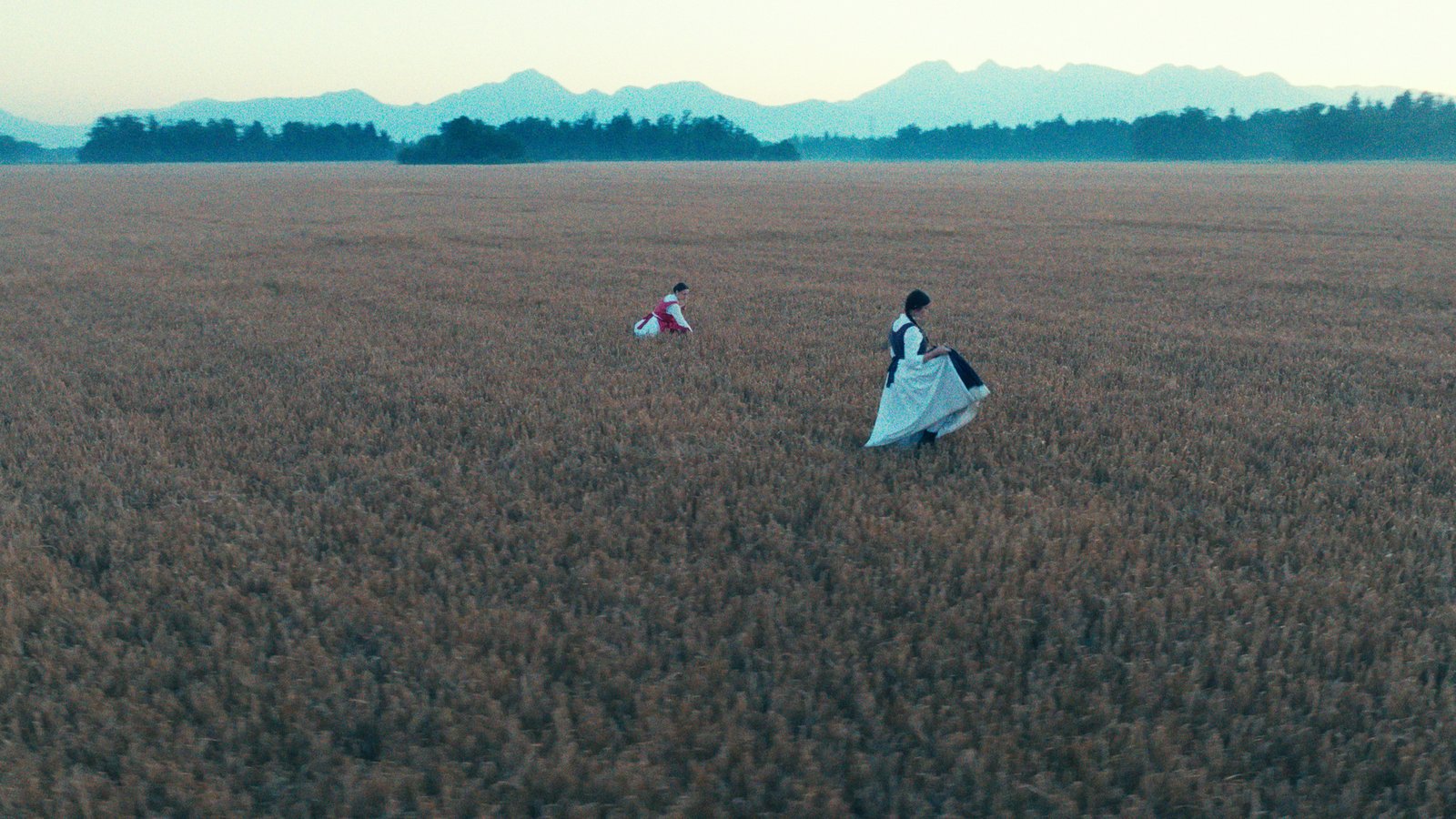
The release
The film appears on the @zevnikov channel as a stand-alone musical edition. Because the song speaks a language understood by anyone who has ever waited for someone, we prepared for it a path into the world unlike anything we have released before: titles, descriptions and subtitles in forty-three languages, each made from scratch rather than translated — from the English Sit Down, Swallow. Don't Fly Yet. to Japanese, Georgian and Icelandic. The swallow of the refrain has become an ambassador; in every language, we ask her not to fly away yet.
In this work we held to a principle stricter than it sounds: in every language the title is sought from the beginning, not translated from a winner. What sounds like a plea in English must run on the verb in Hungarian, on anaphora in Russian, and in the Romance languages must mind that grain and wheat are not always the same word. Everywhere, though, the same anchor holds: autumn, not harvest — because in most languages it is autumn that carries melancholy, while harvest carries labour and abundance. The thumbnails, too, carry their text in the viewer's language, and at the head of every description stands a motto — the second stanza of the song, always in the reader's language, never in the original; the one exception is the Slovene edition, where the Prekmurje dialect may stand alone. The Slovene title is the other exception, and the only one that needs no explaining: Zrejlo je žito.
A Slovene version of this essay — this text's older sibling, written first — lives on this site as well. If the film takes hold of you, the doors stand open: find Spejvaj nama, Katica and hear how the song sounds without an orchestra; find Kreslin's Spominčice and hear where he carried it; and next August, if you find yourself standing at the edge of a wheat field, listen. The song is still there.
What remains? The footage, of course — a few minutes of film about a song that has outlived centuries and will outlive us. But something else remains, a lesson this work teaches me every time: the deepest things are not complicated. Four lines. Ripe grain, yellow straw, a sorrowful girl, a swallow. Three singers whom the world sings needed all of their gift to sound as simple as the women who once sang this song to the cimbalom; we needed the entire apparatus of cinema for a field to look, on film, the way a field looks. Perhaps that is the definition of what we do: the greatest possible effort, back towards the simple. The swallow flies away in the end — it always flies away. But as long as the song is sung, it returns every summer.
Zrejlo je žito in frames
The swallow flies away in the end — it always flies away. But as long as the song is sung, it returns every summer. Sejdi tam sejdi, las'vica.
A note when a new essay or travelogue appears. No noise, unsubscribe in one click.