Handel's Messiah is the most famous sacred work in the world and the least typical of its composer — an oratorio without characters, about a Saviour who is never named within it, written in twenty-four days by a near-bankrupt opera impresario and rescued, in the end, by a hospital for abandoned children. This essay traces its making, its meaning and its long afterlife — the Hanoverian politics, the war on Deism, the charity that made it immortal — and listens closely to seven choruses in a Baroque-scaled account by the Megaron Chamber Choir under Gary Graden, filmed in the cathedral at Koper and the Slovenian Philharmonic.
He has made a fine entertainment of it, though not near so good as he might and ought to have done. I have with great difficulty made him correct some of the grossest faults in the composition.Charles Jennens, librettist of Messiah, to his friend Edward Holdsworth (1743)
Fishamble Street, 13 April 1742
On the afternoon of 13 April 1742, in a narrow lane off the river Liffey, something happened that the people crowding into Mr Neal's new Music Hall could not have measured. They had come for a charity concert. The notices in Faulkner's Dublin Journal had asked the ladies to leave off their hooped skirts and the gentlemen to come without their swords, so that the room — built the year before for a society devoted to the relief of imprisoned debtors — might hold a few more bodies, and a few more shillings be raised for the gaols and the hospitals. Some seven hundred people pressed into a hall meant for six. The air, one witness thought, was close to suffocating.
Then a German composer in his late fifties, stout, gout-ridden, his London opera company in ruins and his fortune badly dented, sat down at a small chamber organ he had carried across the Irish Sea, and conducted the first performance of a work he had set in twenty-four days the previous summer. There was no plot, no scenery, no costume, no hero who stepped forward and sang his name. There was only a sequence of words from the Authorized Bible and the Book of Common Prayer, and the sound of voices.
When the contralto Susannah Cibber — an actress hiding in Dublin from a divorce scandal that would have barred her from any London stage — sang He was despised and rejected of men, the Anglican clergyman Patrick Delany is said to have risen in the hall and cried out: Woman, for this be all thy sins forgiven thee. People wept. Within Handel's own lifetime the piece would become a national institution; within a century it would be the most performed large choral work in the Western world; and three centuries on, in cities its composer never heard of, in languages he never spoke, it would still be sung every December and every Easter, the one piece of art that millions of people who own almost no classical music nonetheless possess.
This is the strange double fact of Handel's Messiah. It is at once his most famous work and his least typical — an oratorio with no characters in a career built on operatic character; a sacred drama about a saviour who is never impersonated and never even named within it; a commercial gamble by a near-bankrupt impresario that became, of all things, the soundtrack of English charity and the closest thing the Protestant world has to a shared liturgy. To understand how that came to pass we have to put the work back into the world that made it: a Britain at war and on edge, a London opera market in collapse, a quarrelsome librettist with a private theological mission, and a composer who, more than once in his life, turned catastrophe into the thing he is now loved for.
A German in London
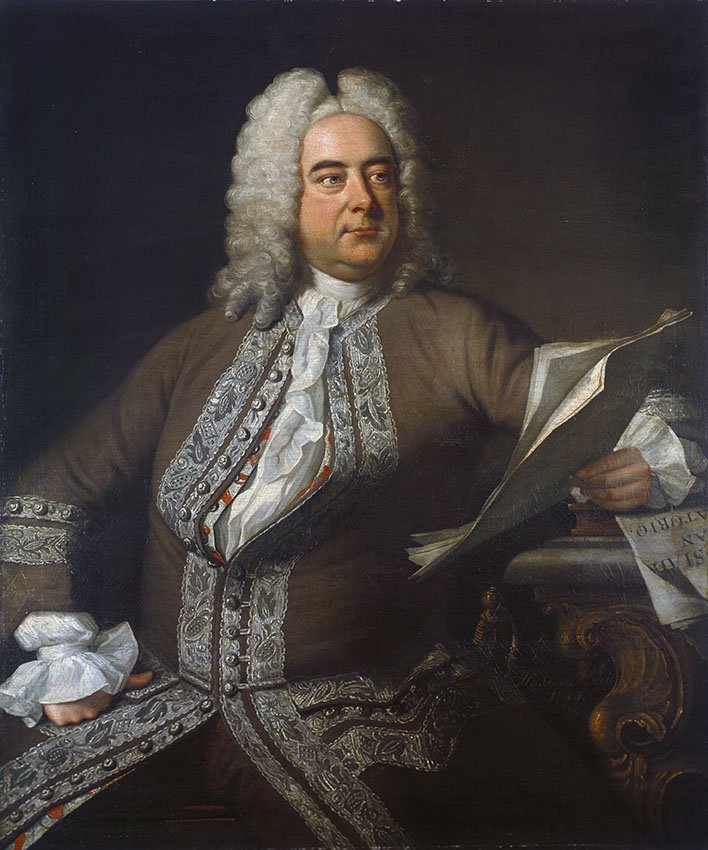
The man at the organ in Fishamble Street had been a Londoner for thirty years, and a British subject for fifteen, but he had been born Georg Friedrich Händel, in the Saxon town of Halle, on 23 February 1685 — the same year, and within a month, of Johann Sebastian Bach and Domenico Scarlatti, the annus mirabilis of late-Baroque genius. The two Germans never met; they would die a tragic decade apart, both blind, both, it seems, ruined by the same travelling charlatan of an eye-surgeon. But where Bach spent his life in the service of Lutheran churches and Saxon courts, Händel became the most cosmopolitan musician of his age: a German trained in the Italian style who made his career, his fortune and his fame in England, and who fused all three national idioms — German counterpoint, Italian melody, French ceremony — with a fourth he half-invented, the sound of English public sacred music.
In 1741 he was, by most outward signs, a man whose great years were behind him. For three decades Italian opera had been the engine of his London life; now it was failing him. Audiences had tired of it; the ruinous "opera war" of the 1730s had drained his purse and his health; in 1737 he had suffered a stroke that briefly cost him the use of his right hand. He was fifty-six, in a century when that was old. And yet the work that would carry his name furthest into the future lay just ahead of him — written, characteristically, at speed, under pressure, with the printer's deadline of a Dublin season at his back.
The path from that Halle attic to the London stage ran through two decisive apprenticeships. In 1703 the eighteen-year-old left for Hamburg, the prosperous Hanseatic city whose Oper am Gänsemarkt was the first public opera house in Germany — not a court theatre but a civic enterprise, the kind of commercial, ticket-buying musical world he would spend his life mastering. There he played second violin and then harpsichord, learned the trade of opera, fought a duel with his friend Johann Mattheson over a seat at the keyboard, and at nineteen saw his first opera, Almira, succeed. Then, in 1706, he went to Italy — to Florence, Rome, Naples, Venice — and submitted himself to the source. He met Corelli and the Scarlattis; he absorbed the Roman cantata and the Venetian opera; in Rome, where the popes had banned opera, he poured his theatrical instinct into sacred music and wrote the blazing Dixit Dominus. In 1709 his Agrippina ran for an astonishing twenty-seven nights in Venice, and the audience, thunderstruck, shouted Viva il caro Sassone.
He returned north to a post as Kapellmeister to the Elector of Hanover — and almost immediately took leave for London, where in 1711 his Rinaldo became the first Italian opera written for the English stage, and a sensation. When, in 1714, his Hanoverian employer unexpectedly became King George I of Great Britain, the awkwardness was real but temporary: the composer who had quietly abandoned his German master now found that master installed as his British king. Handel never went home again.
The Italian crucible
Everything Handel became was forged in his three Italian years, and it is worth dwelling on them, because they explain the singular nature of his genius. When he crossed the Alps in 1706 he was a gifted German organist steeped in counterpoint; when he came down again he was a master of the most glamorous and expressive idiom in Europe, the Italian vocal style — its long, singing melodic lines, its dramatic harmony, its command of the human voice. In Rome, where opera was banned by papal decree, the cardinals competed to patronise the brilliant young Saxon, and he answered with a flood of secular cantatas and with sacred music of astonishing power — the Dixit Dominus of 1707, written when he was twenty-two, is already a thunderclap, its choral writing of a violence and grandeur that announces the composer of the Messiah choruses three decades early. He met and measured himself against the leading Italians — Corelli, who led his orchestra; Alessandro Scarlatti and his prodigious son Domenico, with whom legend has Handel duelling at harpsichord and organ (the organ, all agreed, went to Handel).
The result was a fusion no one else achieved so completely. Bach absorbed the Italian style from scores; Handel absorbed it from the air of Rome and Venice, and married it to his German contrapuntal training and, later, to the broad ceremonial manner of English church music. This is the secret of his sound: an Italian gift for melody and the voice, disciplined by German counterpoint, and scaled to English grandeur. It is also the secret of Messiah's strange accessibility. The choruses have the rigour of a German fugue, but the tunes have the immediate, singable warmth of Italian opera, so that music of real contrapuntal complexity goes down as easily as song. No purely German composer and no purely Italian one could have written it. It took a Saxon who had been remade in Italy and naturalised in England — a musician with three countries in his ear — to compose the most universal of all sacred works.
To understand how this cosmopolitan genius came, in 1741, to write a sacred oratorio for a charity concert in Dublin, we have to step back from the man and survey the world he worked in — for Messiah was not composed in a vacuum of pure inspiration but in a specific and turbulent place and moment: Hanoverian Britain, a young, anxious, money-driven, war-haunted nation still arguing about what it was. Three contexts shaped the work and gave it its character, and the first is the strangest: the politics of a kingdom that had imported its king, and the bizarre commercial war over Italian opera that nearly ruined the composer and pushed him, in the end, toward the form that would save him.
A king, his prime minister, and his furious son
Over this nervous settlement presided, from 1721 to 1742, one of the most consequential figures in British history: Sir Robert Walpole, the first man we would recognise as a prime minister. Walpole governed through patronage, management and the careful avoidance of glory — "let sleeping dogs lie" was his temperament — and he kept Britain out of war, and money flowing, for two decades. He was also, by the late 1730s, the most hated man in the country among the fashionable opposition, a coalition of disaffected Whigs and Tories who gathered, as such oppositions always did under the Hanoverians, around the heir to the throne. For the Georgian royal family ran on a peculiar and reliable poison: the king and the Prince of Wales loathed each other. George I had imprisoned his son; George II and his son Frederick repeated the pattern with interest. The court party and the "reversionary interest" of the heir were rival establishments, and everything — politics, patronage, and, as it happened, opera — could be drawn into their quarrel. This matters for Handel because Handel was, unmistakably, a court composer in the public mind. He had written the anthems for George II's coronation in 1727 — including Zadok the Priest, sung at every British coronation from that day to this — and his Italian opera company at the King's Theatre enjoyed royal patronage and a royal subsidy. To be Handel's partisan was, loosely, to be the king's; to oppose Handel was a way of opposing the court without quite committing treason. In the 1730s this submerged politics surfaced as one of the strangest episodes in musical history: the war of the opera houses.The opera war
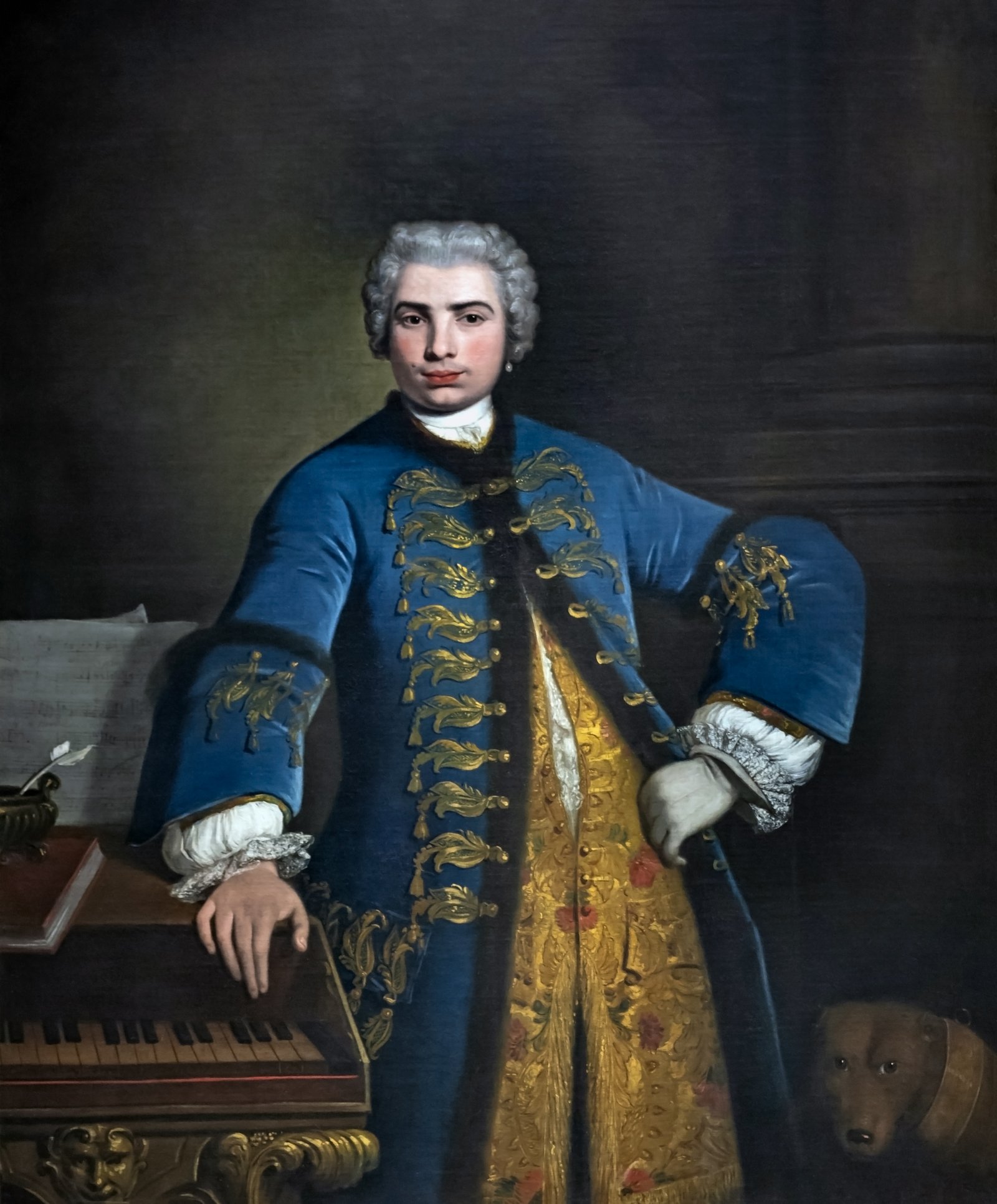
Italian opera in London was a luxury good of breathtaking expense — "the most expensive of human endeavours, save war," as one wit put it — and it depended on a small pool of star castrati and sopranos whose fees could ruin a company in a season. In January 1733 a group of noblemen, with the Prince of Wales in their orbit and Handel's former patron Lord Burlington among them, founded a rival company pointedly remembered as the Opera of the Nobility. Their strategy was simple and brutal: poach Handel's singers and break him. They lured away his star castrato Senesino, then the celebrated soprano Cuzzoni, and they imported as their musical director the Neapolitan Nicola Porpora — Handel's near-equal as a composer and, as the greatest singing-teacher of the age, the master of the very castrati who were now London's pop stars. In 1734 they secured the ultimate weapon: Carlo Broschi, called Farinelli, perhaps the most extraordinary singer who ever lived, whose arrival caused a frenzy that a modern reader can only understand by thinking of the screaming crowds of a much later century. For three or four seasons London had two Italian opera companies where it could barely sustain one, each bleeding money, each a proxy in the larger fight between court and opposition. Porpora answered Handel and Handel answered Porpora — and out of this commercial death-match came some of the supreme works of the age, Handel's Ariodante and Alcina among them. But the arithmetic was pitiless. By the time the Opera of the Nobility collapsed in 1737, its backers had lost more than twelve thousand pounds and Handel close to ten thousand — a fortune — and the strain had helped bring on his stroke that spring. The seriousness of his illness was hushed up, lest it cheer his rivals. He recovered at the spa at Aix-la-Chapelle, where the nuns marvelled that a man so disabled could play the organ; and he came back to a hard truth that the catastrophe had taught him. Italian opera in London was finished as a business. If he was to survive, he would have to find a new audience, a new form, and a new language — and he had, in fact, already begun to find all three.A nation remaking itself in money
There is a second revolution behind Handel's London, quieter than the political one but just as decisive for his art: a financial revolution. The Britain of the early eighteenth century was inventing modern capitalism — the national debt, the Bank of England, the joint-stock company, a London stock market trading paper fortunes. This new world of credit and speculation produced, in 1720, the first great modern financial crash, the South Sea Bubble, in which a frenzy of speculation in the shares of the South Sea Company inflated and then burst, ruining thousands and shaking the political class. Handel, characteristically, was on the right side of it: he had invested early and, it seems, sold before the collapse, and he would spend his life as a shrewd holder of government stock and Bank of England annuities. The point is not merely biographical. The audience that bought tickets to Handel's operas and oratorios was, increasingly, this new commercial public — merchants, financiers, professionals, the moneyed middle ranks — and the whole basis of his career was that he sold his art to a paying public rather than depending wholly on a court or a church. He was, in the most literal sense, a commercial composer in a way Bach, tied to a Lutheran town and a council, never was. The market that nearly destroyed him in the opera war was the same market that, refitted with the cheaper, English, middle-class form of oratorio, would make him rich and immortal. Messiah is, among everything else, a product of the world's first consumer society finding that it wanted, of all things, the sacred.The poaching war, in detail
The opera war deserves a closer look, because its absurd extravagance is the immediate backdrop to Handel's pivot toward oratorio. London's appetite for Italian opera depended on a handful of imported superstars — castrati and prima donnas whose fees and tantrums could sink a season. Handel had already lived through the legendary feud between his two rival sopranos Faustina Bordoni and Francesca Cuzzoni, whose partisans had once reduced a performance to a brawl, hissing, catcalling and (it was said) actual fisticuffs in the boxes — opera as blood sport. When the Opera of the Nobility set out to destroy him in 1733, it did so by buying his roster out from under him: first the great castrato Senesino, Handel's leading man for a decade; then Cuzzoni; then, as music director, Nicola Porpora, the Neapolitan master who had trained half the castrati in Europe. And in 1734 they landed the impossible prize — Farinelli, whose voice was so extraordinary that grown men reportedly wept and women fainted, and of whom the cry went up in the theatre, "One God, one Farinelli!" For two or three seasons London supported two competing opera houses where it could barely fund one, each haemorrhaging money to the same small pool of singers, each a banner for the warring camps of court and opposition. The result was mutual ruin: by 1737 both companies were broken, the Nobility's aristocratic backers were out more than twelve thousand pounds, Handel had lost close to ten thousand, and the strain had helped bring on the stroke that nearly killed him. The lesson Handel drew was the one that changed musical history. The star system was a trap; the future was not in importing a Farinelli but in a form that needed no foreign superstar at all — that put an English chorus, not an Italian castrato, at the centre of the stage.A people who needed to be the new Israel
Finally, there was the religious temper of the nation, and it is essential to why oratorio in particular succeeded. Protestant Britain in the 1730s and 40s was a country at more or less permanent war or cold war with Catholic France and Spain, and it understood that struggle through the lens of the Bible. It saw itself as a new chosen people — a small, embattled, Protestant Israel, defended by Providence against the idolatrous empires around it. Handel's Old Testament oratorios fed this self-image with uncanny precision. Israel in Egypt, Saul, Judas Maccabaeus, Joshua — these are stories of a covenant people delivered from bondage, of righteous kings and divinely sanctioned victory, and a London audience heard them as, in effect, allegories of its own destiny. The choruses in which Israel triumphs over Pharaoh or Babylon were, to that audience, also choruses in which Britain triumphed over France and Rome. Messiah sits a little apart from this nationalist current — its subject is universal redemption, not national deliverance — but it shares the form's deep grounding in the Authorized Bible, the book that was, for that nation, simultaneously scripture, literature and political charter. When Handel set the words of Isaiah and the Psalms, he was setting the most familiar text in the English-speaking world, words his listeners had heard from the cradle in church and would have known by heart. The astonishing intelligibility of Messiah, its capacity to lodge in the national memory, begins here: it is built from words a whole people already carried inside them.The shadow of war
Messiah was written in the late summer of 1741 into a darkening sky. Britain had stumbled the year before into the War of the Austrian Succession; the long Walpolean peace was ending. Within months of the Dublin premiere Walpole himself would fall from power, in February 1742, ending an era. Three years later the last great Jacobite rising would carry a Stuart army to within a hundred and twenty miles of London before its annihilation at Culloden — after which Handel, ever the loyal Hanoverian, would write Judas Maccabaeus in honour of the victorious Duke of Cumberland, and the genre of the biblical oratorio would become, among much else, an instrument of British patriotism. The serenity we hear in Messiah was not composed in serene times. It was composed by an anxious, ageing, recently broken man, in a country at war and uncertain of its own foundations, who reached past all of it for words about light coming into darkness.That reach toward a new form did not come from nowhere. Through the 1730s, between operas, Handel had been quietly building a different kind of public music — one that would, within a few years, make the opera war irrelevant and hand him a second career grander than his first. To follow that thread we have to leave the politics of the theatre for a moment and watch a genre being invented almost by accident.
Handel and his rivals
Genius of this order does not grow in isolation, and Handel's career was defined, to an unusual degree, by rivalry — some of it bitter, some of it merely the friction of a crowded marketplace. His first great London contest, in the 1720s, was with Giovanni Bononcini, a sophisticated Italian whose operas briefly rivalled his own; London divided into camps, and the quarrel was immortalised in a famous epigram that gave the language a phrase — that the difference between Handel and Bononcini was the difference between "Tweedledum and Tweedledee." The deeper and more damaging rivalry was with Nicola Porpora in the opera war of the 1730s, a fight that was less about art than about the ruin of a business, and which cost both men dearly. Handel won it, in the only sense that mattered: he survived, and Porpora returned to the Continent.
But the rivalry posterity finds most irresistible is the one that never actually happened. Handel and Johann Sebastian Bach were born within a month of each other in 1685, in Saxony, scarcely a hundred miles apart, the two supreme masters of the late Baroque — and they never met. Bach, it is said, twice tried to arrange a meeting when Handel was visiting nearby Halle; both times it came to nothing. Their lives form a study in opposites: Bach the church musician, rooted all his life in Lutheran Germany, writing for God and the choir loft, little known beyond his region; Handel the cosmopolitan man of the theatre, rich, famous, international, writing for a paying public. Yet they end in an eerie rhyme, both blind in their last years, both, it appears, operated on by the same travelling charlatan, John Taylor, and both dying within nine years of each other. A happier relationship was with Georg Philipp Telemann, the most prolific composer of the age and Handel's lifelong friend from their student days; the two corresponded warmly to the end, exchanged gifts of rare plants for Handel's garden, and Telemann stood as godfather to Handel's namesake. The rivalries sharpened him; the friendship sustained him. And towering over all of them, by the verdict of the generation that followed, stood Handel himself.
The invention of English oratorio
The English oratorio is one of those art forms that has a single inventor, and the inventor is Handel — though, like most inventions, it began as improvisation under constraint. The seed was an early work, Esther, a small sacred drama in English that Handel had written around 1718 for a private patron. For more than a decade it sat unperformed in public. Then, in 1732, a pirated staging forced his hand; he mounted Esther himself, at the King's Theatre, but the Bishop of London forbade the sacred story to be acted on a stage by costumed singers. So Handel performed it unstaged — in concert, with the singers standing and the drama carried entirely by the music. The prohibition turned out to be a gift. He had stumbled onto a form that needed no scenery, no costumes, no expensive Italian stars, and no licence to dramatise scripture: a sacred play for the ear.
The form's true engine, and its great departure from Italian opera, was the chorus. Opera seria had pushed the chorus to the margins; it was an art of solo display, of the da capo aria and the star voice. Handel's oratorio brought the chorus back to the centre of the stage and gave it the leading role — sometimes narrating, sometimes commenting like the chorus of a Greek tragedy, sometimes becoming a character in its own right, a crowd, a nation, a host of angels. In doing so Handel drew on a reservoir his Italian rivals could not match: the German Lutheran choral tradition of his boyhood and the grand English ceremonial style of his coronation anthems. No Italian opera composer could have written the choruses of Messiah. They are the work of a man raised on chorales and trained in counterpoint, writing for a Protestant nation that loved to sing.
The decisive breakthrough came in 1739, two years before Messiah, with two oratorios written in close succession: Saul and Israel in Egypt. The first told a vivid biblical drama with named characters; the second did something stranger and more prophetic. Israel in Egypt was built almost entirely of choruses, set word-for-word to the Bible, with scarcely any solo display at all — a vast choral fresco of the Exodus, the plagues, the drowning of Pharaoh's army, the song of Moses. One early listener complained it was "too solemn for common ears." But it pointed directly at what Messiah would be: a sacred oratorio drawn straight from scripture, with the chorus as protagonist and God, in effect, as the hero. Among Handel's two dozen oratorios, only these two take their texts entirely from the Bible — and the same fastidious, devout hand, most scholars agree, assembled both.
So when, in the summer of 1741, Handel sat down to compose, he was not striking out into the unknown. He had spent a decade perfecting the instrument — the English biblical oratorio with its sovereign chorus — on which Messiah would be played. What he had not yet had was the right text. That came from a quarter he had worked with before, and it came with a purpose that was anything but innocent. For the libretto of Messiah was not a devotional miscellany assembled by a pious amateur. It was, in the mind of the man who made it, a weapon in a theological war.
A non-juror and an enemy of Deism
The key to Jennens is a single, costly fact: he was a non-juror. After the Glorious Revolution, a minority of devout Anglicans refused on conscience to swear allegiance to the new dynasty, holding that their oath to the deposed Stuart line still bound them. Non-jurors paid dearly for their scruple. Jennens, who held to the legitimacy of the exiled Stuarts, could not graduate from Oxford, could hold no public office, could play no part in public life. Shut out, he turned inward and upward — to a vast art collection, to a great library, to scrupulous editions of Shakespeare he prepared late in life, and to theology. He was a man of "primitive" apostolic Christianity, intensely devout, and he was, in the language of his day, an anti-Deist. Deism was the characteristic religious heresy of the early Enlightenment — the belief in a rational, distant God who set the universe in motion and then withdrew, leaving no room for revelation, miracle, prophecy or the Incarnation. To the Deists, the idea of God intervening in history, of an interventionist providence working through a chosen people toward a promised Messiah, was so much priestcraft and superstition. To an orthodox believer like Jennens, this was the great spiritual threat of the age — a corrosion of revealed religion from within the educated classes. And it is here that Messiah reveals its hidden design. Jennens drew heavily on a key anti-Deist text, Bishop Richard Kidder's A Demonstration of the Messias, in which the Truth of the Christian Religion is Proved; more than half the scriptural verses Jennens selected for Messiah are verses Kidder had cited to prove, against the rationalists, that Jesus was the Messiah whom the Hebrew prophets had foretold. Messiah, on this reading, is not a sweet seasonal devotion. It is an argument — a marshalling of prophecy and fulfilment designed to demonstrate, to a sceptical and fashionable age, the truth of an interventionist God.The strangeness explained
This purpose accounts for the work's most peculiar features, the things that puzzle every first-time listener. Why is the libretto, ostensibly about Christ, drawn roughly sixty per cent from the Old Testament? Because the whole argumentative strategy is one of prophecy and proof: the Hebrew prophets foretell; the New Testament confirms. Why is there no narrative — no manger scene to speak of beyond a few lines of Luke, no Last Supper, no trial, no crucifixion described, no empty tomb shown? Because Jennens is not dramatising a life; he is contemplating a mystery and building a case. The watchword is a phrase from St Paul that Jennens set near the heart of his design: the work is a meditation on "the Mystery of Godliness" — God manifest in the flesh. Where opera shows you a person, Messiah refuses to. The Saviour is everywhere in it and is impersonated nowhere; he is approached only through prophecy, type, and the response of the believing soul. The scholar Watkins Shaw, no flatterer of Jennens, conceded that the libretto "amounts to little short of a work of genius." There may have been a more worldly reason for the indirection as well. Some scholars note that to put the figure of Jesus on a public stage in 1742 — even unstaged, even in concert — risked the charge of blasphemy and prosecution; reticence was also prudence. The truth, as so often, probably lies between the polemical and the cautious. But the design is unmistakable, and it is Jennens's. He gave the collection its Old Testament title — Messiah, not "The Life of Christ" — and he built its three-part arc as an act of theology: prophecy and incarnation; suffering, sacrifice and the spread of the gospel; and, at the last, the defeat of death and the final redemption. He valued it above everything else he made. "I shall show you a collection I gave Handel," he wrote to a friend, "called Messiah, which I value highly."The method of types and figures
The intellectual machinery of Jennens's libretto is a mode of biblical reading as old as Christianity itself: typology, the doctrine that the persons and events of the Old Testament prefigure those of the New. On this view the Hebrew scriptures are not merely a history but a vast system of foreshadowings — Isaac carrying the wood for his own sacrifice, the Passover lamb, the suffering servant of Isaiah — all pointing forward to their fulfilment in Christ. Jennens's genius was to build Messiah almost entirely out of these prophetic types and let the listener's own knowledge supply the fulfilment. When the bass sings Haggai's prophecy, "the Lord, whom ye seek, shall suddenly come to his temple," or Malachi's image of the refiner's fire, the eighteenth-century listener knew exactly whom the prophet was taken to mean. The argument works by resonance: the Old Testament voice speaks, and the believing ear hears Christ. This is why the work can be about Jesus while quoting, overwhelmingly, texts written centuries before him. It is also why it never needs to show him. The figure at the centre of Messiah is constructed entirely out of prophecy and response — present as the object of every line, absent as a character — which is theologically exact: in this tradition Christ is precisely the one whom the whole of scripture is about. Jennens turned a method of reading into a method of composition.Words a nation knew by heart
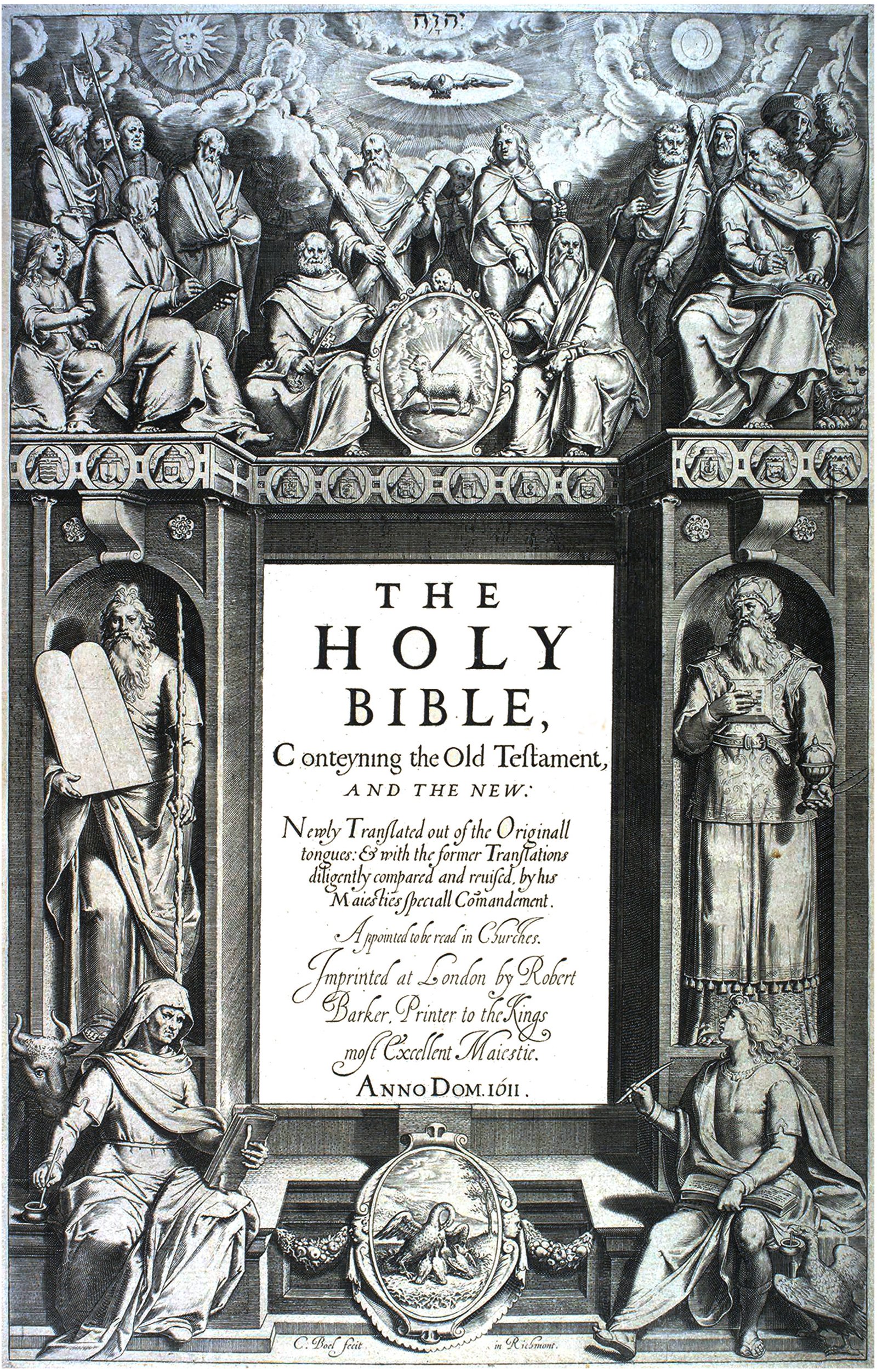
Jennens drew his text from two sources, and the choice of both was deliberate and consequential. The prophetic and gospel passages come from the Authorized (King James) Version of 1611; the Psalms come not from the King James but from the older translation of Miles Coverdale as preserved in the Book of Common Prayer — the version Englishmen heard chanted at Morning and Evening Prayer all their lives. The effect is that Messiah is sewn together from the two texts most deeply lodged in the English ear, words worn smooth by a century and more of liturgical use. This is not incidental to the work's power; it is central to it. Handel did not have to teach his audience the words of Messiah; they already possessed them, and the music could therefore work on a text that was, for the listener, half memory. There is a further subtlety. Jennens, an exacting editor — he would later produce some of the first critically annotated editions of Shakespeare — selected and very occasionally adjusted his verses with a craftsman's care for rhythm and sound, choosing phrasings that fell well under music and arranging them so that prophecy and fulfilment answered each other across the span of the work. The libretto reads, in places, like a found poem assembled from scripture, and the seams are almost invisible.The argument, scene by scene
Seen whole, the design is rigorous. Part the First moves from the promise of comfort (Isaiah's "Comfort ye") through the prophecies of the coming light and the virgin birth, to the one genuine narrative — the angels and the shepherds, in the words of Luke — and ends with the gentle pastoral vision of the shepherd gathering his lambs. The argument here is incarnation: God enters the world. Part the Second is the great central movement, and it is built as a single arc of redemption through suffering: the Lamb of God who bears the sins of the world; the scorn and rejection ("He was despised"); the scourging and the mockery of the crowd; the descent and the triumph; the ascension; the sending out of the gospel to all the earth ("Their sound is gone out into all lands"); the raging of the nations against the Lord's anointed; and, crowning it all, the Hallelujah — not the resurrection but the proclamation that God reigns. Part the Third draws the personal conclusion: "I know that my Redeemer liveth," the Pauline theology of the resurrection of the body, the trumpet that shall sound, the defeat of death itself, and the final, eternal worship of the Lamb, sealed with the great "Amen." Prophecy, passion, redemption; promise, sacrifice, consummation. It is a sermon in three movements, and its logic is as tight as a syllogism — which is exactly what a polemic against the Deists required. The wonder is that Handel could clothe so deliberate an argument in music that feels not like argument at all, but like revelation.Two men, one masterpiece
The collaboration was real and it was prickly. Jennens sent Handel the text in the summer of 1741 and was wounded to learn that the composer had carried it off to Ireland rather than premiere it in London — "it was some mortification to me," he wrote. He thought Handel had set it too fast, with "careless negligence," and he badgered him for revisions, winning some and losing others; Handel "retained his overture obstinately." Yet Jennens came round. In time he allowed that it was, "in the main, a fine composition." Posterity has been less grudging than its librettist. But it is right to remember, as the conductor and writer of a recent study has urged, that this supreme work is the offspring of two minds — a devout, depressive, learned recluse who built the argument, and a worldly, resilient man of the theatre who clothed it in sound so persuasive that, ever since, the argument has been carried not by its logic but by its music. Jennens wanted to convince the head. Handel went straight for the heart, and won.If the words were a theological argument, the setting of them was a feat of sheer creative velocity that has become one of the founding legends of Western music — and, like most legends, it is half true and the more interesting for the half that is documented. To watch Handel compose Messiah is to watch a master craftsman working at white heat, and also a shrewd professional reusing what lay to hand.
Twenty-four days
Handel began composing Messiah on 22 August 1741 and finished the drafting on 14 September — twenty-four days for two and a half hours of music, some two hundred and sixty pages in his own hand. The pace is genuinely astonishing, and it has bred a pious legend: that Handel composed in a fever of divine visitation, scarcely eating, his food left untouched at the door, his servant finding him in tears, crying after the Hallelujah that he "did think he did see all Heaven before him, and the great God himself." These stories are almost certainly embroidered — they cannot be traced to Handel and surface only much later — and we should hold them lightly. But the speed was real, and so was something more revealing than any anecdote: at the end of the manuscript Handel wrote three letters, SDG — Soli Deo Gloria, to God alone the glory. It is the same inscription Bach habitually placed on his scores, the reflex of a Lutheran craftsman, and it is the closest thing we have to Handel's own comment on what he had made.
The legend of pure inspiration also obscures the professional's method, which is in its way more impressive. Handel did not compose Messiah from nothing. As was entirely normal in his world, he reused his own recent material — and the source is startling. Two of the most radiant choruses in the work began life as Italian love duets. "For unto us a Child is born" and parts of "All we like sheep" are reworkings of a flirtatious chamber duet, Nò, di voi non vo' fidarmi (roughly, "No, I won't trust you"); "And he shall purify" and "His yoke is easy" come from another, Quel fior che all'alba ride. The very vocal runs that we now hear as sacred jubilation were first written to carry the teasing of secular lovers. Handel sanctified them by recontextualising them — a small parable of his whole art, in which theatrical craft is turned, without apology, to holy ends.
The autograph itself survives, in the British Library, and it is a document worth pausing over. Its pages show the marks of haste — blots, crossings-out, bars left half-filled, the occasional uncorrected slip — the traces of a hand moving as fast as thought. "Handel didn't draft," one modern Handelian has said; "he thought in ink." And yet, as the scholar Richard Luckett observed, the remarkable thing is how few the errors are in a document of such length and speed. This is not chaos; it is fluency. The architecture was clearly complete in Handel's mind before the pen moved, and the pen merely struggled to keep up.
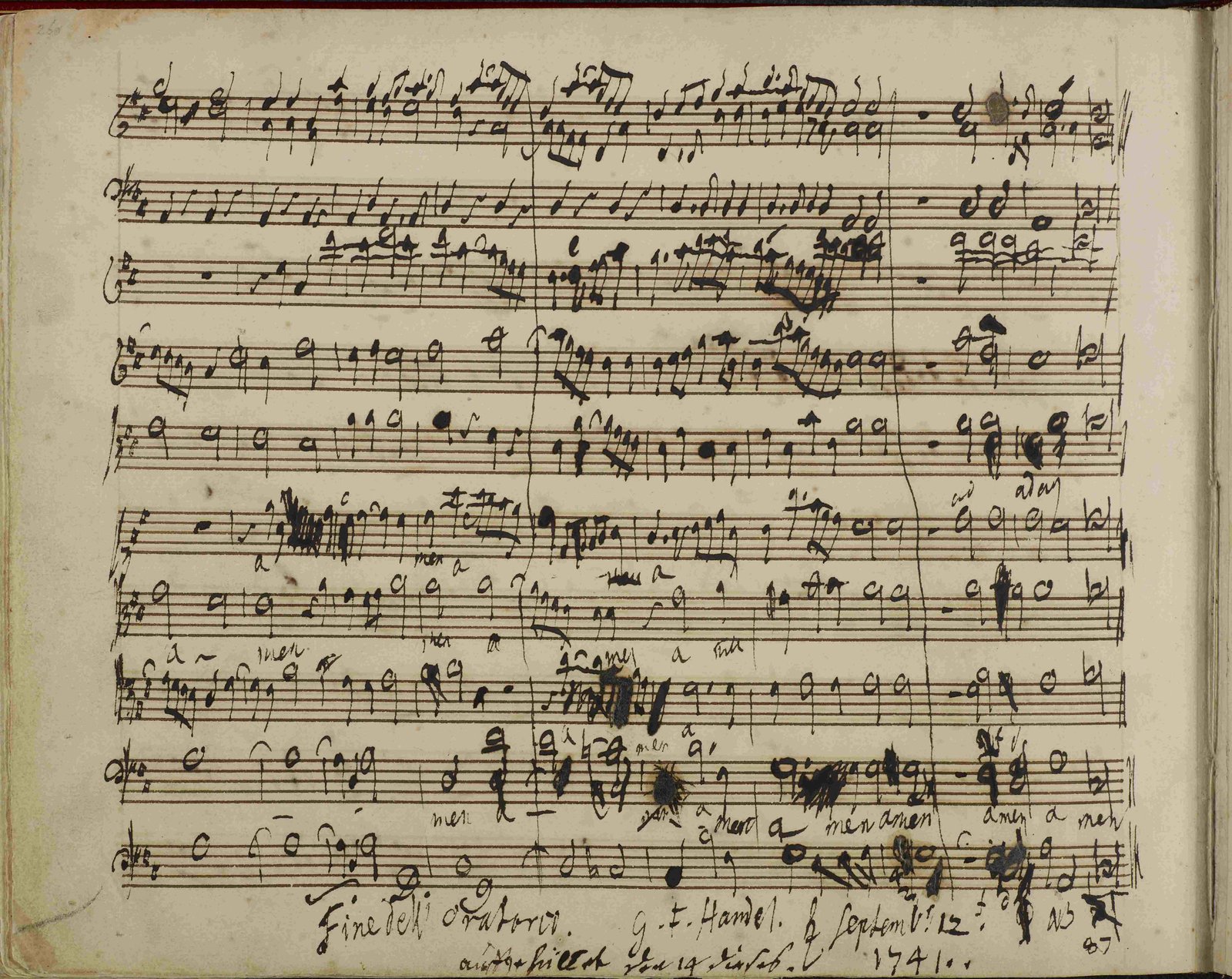
The bare facts of the work's creation are worth setting down together, for they are part of its legend and its meaning: a vast and enduring masterpiece thrown off in a few late-summer weeks, by an ageing man at a low ebb, for a charity concert in a city far from home. The numbers do not explain the music — nothing does — but they frame the miracle.
Dublin, and the first hearing
Why Dublin? The answer is partly accident and partly the shrewdness of a man who knew when to leave town. Handel's London fortunes were at a low ebb, and in the summer of 1741 the Duke of Devonshire, Lord Lieutenant of Ireland, invited him to give a season of concerts in Dublin for the benefit of the city's charities. Handel accepted, packed his portable organ, and arrived in November 1741 carrying the unperformed Messiah with him — to the lasting irritation of Jennens, who had expected the premiere at home. The Dublin season was a triumph; two subscription series sold out. And so, in the spring, Handel proposed a special charity concert, and chose for it the new oratorio. The proceeds would go to three causes that tell you something about the world it entered: the relief of prisoners in the debtors' gaols, Mercer's Hospital, and the Charitable Infirmary on the Inns Quay.
The choirs came from Dublin's two cathedrals, St Patrick's and Christ Church — some two dozen men and boys. The soloists were modest by London standards, and Handel, as he would do all his life, rewrote and reshaped numbers to fit the voices he had. The result, on 13 April 1742, was the scene with which this essay began: the crowded hall, the abandoned swords and hoops, Susannah Cibber's He was despised, the clergyman's astonished cry, the tears. The concert raised about four hundred pounds and freed, it is said, more than a hundred imprisoned debtors. Messiah was born, fittingly, as an instrument of mercy.
London was harder. When Handel brought the work home in March 1743, it ran into precisely the controversy Jennens's indirection had tried to forestall. Was it proper to sing the words of scripture — to sing of the Redeemer himself — in a playhouse, performed by actresses and singers of doubtful morals? An anonymous letter to the Universal Spectator put the objection with memorable sharpness, asking whether the playhouse was "a fit Temple to perform it in, or a Company of Players fit Ministers of God's Word." Stung, Handel did not even print the title; the London premiere was billed merely as A New Sacred Oratorio. The reception was cool. Of six planned performances only three took place; in 1744 the work vanished from his London schedule; for the next several years Messiah was, in London, a near-failure — performed, when at all, under a euphemism. The most famous tradition attached to the work belongs to this uneasy London beginning: the belief that at an early London performance King George II rose to his feet during the Hallelujah chorus, obliging the whole audience to stand, and that we stand to this day in obedience to a Hanoverian reflex. The story cannot be confirmed from any contemporary source. It is, like the legend of the weeping composer, a thing posterity needed to be true.
Two cities, two welcomes
The contrast between the two cities that first heard Messiah is worth pausing on, because it tells us something essential about the work and about the world it entered. In Dublin it was an immediate and unambiguous triumph — embraced, wept over, celebrated, a charity that filled a hall to suffocation and emptied the debtors' prisons. In London, a year later, it met suspicion, controversy and something close to failure, performed under a false name to cool houses and then quietly dropped. Why the difference? Part of it was simply that Dublin was a smaller, more enthusiastic stage, dazzled to have the great Handel in residence, while London was a jaded capital with its own factions and grievances and a press ready to take offence. But part of it went deeper, to the unresolved question the work posed: was this sacred music or theatrical entertainment, devotion or diversion, and where did it belong?
Dublin had heard it, fittingly, in the context of charity, where its purpose was unimpeachable; London first heard it in a playhouse, where the same words seemed to some a profanation. The London objection — that scripture sung by actresses in a theatre was unfit for both church and stage — was not mere prudery. It touched a real ambiguity at the heart of the oratorio, a form that lived precisely on the border between the sacred and the secular, borrowing the music of the opera house to serve the matter of the church. Messiah would never fully resolve that tension; it would instead transcend it, by finding, in the Foundling Hospital chapel, a setting where charity sanctified the spectacle and the question simply ceased to matter. But it is telling that the work which now seems the very emblem of religious music was, at its London birth, suspected of being too worldly for the sacred and too sacred for the world. It took a captain's orphanage, and time, to make it holy.
The arithmetic of death
Eighteenth-century London was a charnel house for the poor and the young. Disease, gin, malnutrition and abandonment killed children on a scale that is hard to credit now: by some contemporary estimates, the majority of children born in the city did not live to the age of five. Unwanted infants — the children of servants seduced and dismissed, of the destitute, of the disgraced — were left on church steps, in doorways, on dunghills, to die. A recent and widely read account of the work's origins, Charles King's Every Valley, presses exactly this darkness on us: Messiah was, King argues, "born in the dark shadows of the Enlightenment," in a Britain at war and amid an infant mortality so high that the oratorio's promise of comfort answered a real and present terror. The serene confidence of the music — He shall feed his flock like a shepherd; he shall gather the lambs with his arm — was not naïve. It was sung over a city that buried its lambs by the thousand.Thomas Coram's improbable charity
Against this, one stubborn man set himself. Thomas Coram, a retired sea-captain who had grown rich in the American trade, was so appalled by the dying infants he saw in the streets of London that he spent seventeen years campaigning for a refuge for them. The respectable balked: a charity for illegitimate children, they feared, would only encourage vice. Coram persisted, enlisting the great ladies of the age to his cause, and in 1739 King George II granted a royal charter for a Hospital for the Maintenance and Education of Exposed and Deserted Young Children — the Foundling Hospital. It became the most fashionable and most important charitable institution of Georgian Britain, and a kind of cultural club: the painter William Hogarth — who called the age "a golden age of English philanthropy" — filled its walls with donated pictures, effectively founding Britain's first public art gallery in the process. And Handel gave it his music. In May 1749 he offered a benefit concert toward the completion of the hospital's chapel, and in 1750 he performed Messiah there — in the chapel, before a packed and tearful congregation. It was a turning point. In the sacred space of a children's charity, the objections that had dogged the work in the playhouse simply dissolved. Here the words of scripture were sung not for entertainment but for mercy, and the effect was overwhelming. The 1750 concert was so oversubscribed that a second had to be added. Handel made the Messiah benefit an annual event, conducting it himself almost every year until his death, raising — over the years — many thousands of pounds for the orphans, and bequeathing to the hospital, in his will, a fair copy of the score and parts so that the charity might go on performing it after he was gone. It still owns them. He also remembered the Fund for Decayed Musicians, the charity for impoverished players and their families.Hogarth, and the first public gallery
The Foundling Hospital was not only a refuge; it was, almost accidentally, the birthplace of the public art exhibition in Britain — and Handel's involvement sits inside a remarkable convergence of the age's leading artists around a single charitable cause. The presiding genius was William Hogarth, the great painter-satirist, who was a founding governor, designed the children's uniforms and the hospital's coat of arms, and — crucially — persuaded his fellow artists to donate major works to adorn its walls. Reynolds, Gainsborough, Hayman and others gave pictures; Hogarth gave his portrait of Coram and other canvases. Because the hospital was fashionable, the public came to visit the children — and, in visiting, viewed the art. In an age when paintings hung in private houses and royal palaces, this was something new: a place where the general public could go to look at contemporary British art, displayed together, for a charitable donation. Historians credit the Foundling Hospital as a direct ancestor of the Royal Academy and the public gallery. The same impulse that brought Hogarth's brush brought Handel's organ. The hospital became a kind of salon of benevolence where the leading creative figures of Georgian London — painters, the composer, the architects, the fashionable and the philanthropic — gathered around the relief of suffering children, and where, not coincidentally, both British public music and British public art found an early home. Handel's annual Messiah was the musical wing of this enterprise, and its success and Hogarth's gallery were branches of the same tree.The tokens, and the lottery of mercy
The reality behind the fashionable charity was harrowing, and worth holding in mind against the serenity of the music. Demand for places vastly exceeded supply, and for a period admission was decided by a grim lottery: desperate mothers drew coloured balls from a bag — a white ball meant the child might be admitted, a black ball meant refusal, a red ball a place on the waiting list — the fate of an infant settled by chance in front of a watching crowd. Mothers who surrendered a child left a small token — a coin, a scrap of patterned fabric, a button, a written note, a ribbon — as the only means of identification should they ever be able to reclaim their baby. Thousands of these tokens survive, and they are among the most heartbreaking objects in any museum: the material residue of an impossible decision, a mother's last touch. Most of the children were never reclaimed. Mortality even within the hospital was high, though far lower than on the streets; the children were given new names, a basic education, and apprenticeships, and many of the boys were eventually sent into military bands — so that the institution Handel's music supported quite literally raised up musicians. This is the human ground beneath the oratorio's most tender pages. When the soprano sings "He shall feed his flock like a shepherd, and gather the lambs with his arm, and carry them in his bosom," the first audiences for that aria in the Foundling chapel included the very children the words described, and the governors and mothers who knew exactly what it cost to gather and carry a lamb. The comfort was not abstract. It was sung to people who needed it.An age that wept on purpose
All of this belongs to a wider transformation in eighteenth-century feeling: the rise of what the age called "sensibility" or "sentiment" — a new cultural value placed on tender feeling, sympathy and benevolence, on the capacity to be moved by the suffering of others and to act on it. The same decades that produced the Foundling Hospital produced the sentimental novel, the cult of fine feeling, and a flowering of charities — for the sick, the fallen, the imprisoned, the orphaned. To be moved to tears by distress, and to open one's purse, was newly a mark of virtue and refinement rather than weakness. Messiah rode this wave perfectly. It offered an experience that was at once devotional, aesthetically overwhelming, and morally improving; weeping at He was despised and then giving to the orphans was the complete sentimental act, religion and feeling and charity fused. The genius of the Foundling benefits was to make attendance at a sublime sacred concert itself a work of mercy, so that the pleasure and the virtue were inseparable. This is a large part of why the work embedded itself so deeply and so permanently in the culture: it was not merely admired, it was loved, and loving it was good for the soul and good for the orphans at once. Few works of art have ever been so perfectly fitted to the emotional needs of their moment — and then turned out to fit the emotional needs of every moment since.How charity made a masterpiece immortal
It is difficult to overstate what this association did for the work. In an age suspicious of sacred drama in secular settings, the Foundling Hospital gave Messiah a legitimate institutional home — a place where its performance was unimpeachably virtuous. It bound the oratorio, in the public mind, to charity, to childhood, to the relief of suffering; it made hearing Messiah a charitable act. The annual benefits made it a fixture of the London calendar and the publication of the score in 1767 spread it across the country and then the Atlantic. A work that had nearly died in the playhouse was reborn in the chapel — and the reason it never again left the repertoire, when so many greater-praised oratorios faded, is at least partly that it had become more than music. It had become a good deed that happened to be a masterpiece. There is something fitting, and very like Handel, in the fact that the most popular sacred work in the world owes its survival not to its theology and not even, at first, to its beauty, but to a sea-captain's pity for dying children and a composer's willingness to give his greatest work away. Handel, it should be said, did not need the money. He died a rich man, with an estate of some twenty thousand pounds — a fortune by the standards of the day — much of it built on shrewd investment in government stock and the Bank of England, the instruments of the very commercial revolution that was remaking his city. That a man so canny with money should pour his most valuable property into a charity for orphans is one of the more attractive facts about him. He had no children of his own; some have wondered whether the foundlings became, in a way, his.With the work's worldly fortunes secured — by mercy, as it happened, rather than by the court or the market — we can finally turn to the thing itself, and ask the question that matters most: how is Messiah actually built, and why does its music do what it does to us? Here, for the first time in this essay, the argument leaves history for the score, and for a series of recordings that let us hear it close.
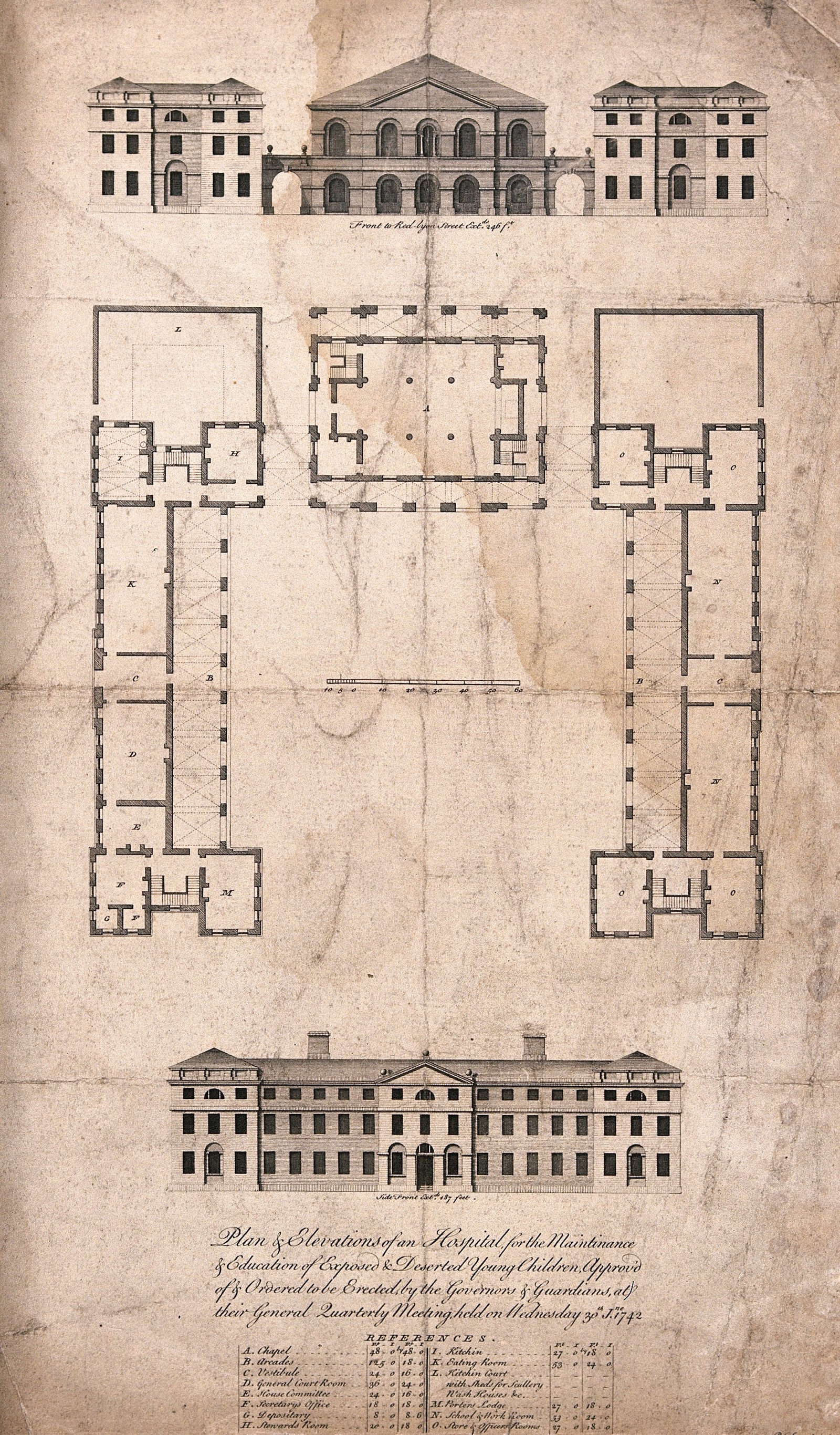
Word-painting and the theatre of feeling
Before we follow the music itself, one principle must be named, because it governs every page of Messiah and is the deepest link between Handel the opera composer and Handel the oratorio composer: the Baroque conviction that music's supreme task is to move the affections — to represent and arouse human feeling — and that it does so, in part, by painting the meaning of words in sound. This was not a vague aspiration but something close to a doctrine, the so-called "doctrine of the affections," and the age had a whole vocabulary of musical figures for joy and grief, ascent and descent, light and darkness. Handel was its supreme practitioner in the vocal sphere, and Messiah is saturated with the technique, usually so deftly that we feel it before we notice it. "Every valley shall be exalted" climbs; "and every mountain and hill made low" sinks; "the crooked straight" lurches and resolves. "All we like sheep have gone astray" wanders off in every direction at once, the voices scattering like a lost flock. The "refiner's fire" flickers; the trumpet that "shall sound" is announced by an actual trumpet; the "darkness" that covers the earth is set low and dim, and the "great light" that breaks upon it leaps suddenly upward into the bright.
It would be easy to dismiss this as mere illustration, the musical equivalent of a pun. It is much more. Word-painting in Handel is the technical means by which an abstract text is made dramatic — by which prophecy becomes experience and doctrine becomes feeling. The genius of Messiah is that a work with no plot and no characters is nonetheless among the most theatrical of all sacred compositions, because Handel brings to it the entire expressive arsenal of the opera house and trains it not on a story but on the meaning of the words themselves. He does not show us a man of sorrows; he makes the music itself sorrow. He does not narrate the coming of light; he makes the light break in the orchestra. This is why the work persuades even those who do not share its theology: the argument is carried not by assertion but by a sympathetic enactment of its meaning in sound, so that the listener does not so much believe the text as undergo it.
The architecture of Messiah
Messiah is built in three parts that together trace an enormous arc — not the story of a life, but the shape of a theology. Part the First is prophecy and incarnation: the promise of a redeemer, foretold by Isaiah and the Hebrew prophets, and the coming of light into darkness, ending with the only true narrative scene in the whole work, the angels' announcement to the shepherds. Part the Second is the great central drama — the suffering and sacrifice of the Redeemer, the scorn of the world, his triumph and the spread of his gospel through the earth, rising to the Hallelujah that crowns it. Part the Third is the consummation: the promise of resurrection, the defeat of death, and the final, eternal praise of the Lamb. Prophecy, passion, redemption. The three parts loosely mirror the three acts of a Handel opera, and Jennens even divided them into "scenes," but the resemblance is structural only. Nothing is enacted. Everything is contemplated.
What carries this architecture is, above all, the chorus, and a single great compositional decision governs the whole: restraint. Handel scored Messiah with extraordinary economy — strings, continuo, two oboes, and, crucially, trumpets and timpani held almost entirely in reserve. The work begins quietly; the chorus enters, astonishingly, not in a blaze but in the low, hushed register of the altos. The trumpets are kept back through nearly the entire first part, so that when they finally break in — at "Glory to God" in the night sky over Bethlehem, and then at the Hallelujah, and at the very end — they land with overwhelming force. A lesser composer would have spent his brass early. Handel hoards it, like a dramatist holding back the entrance of his most powerful character, and the result is one of the great slow crescendos in music, a two-hour withholding and release of light.
The other secret of Messiah is the way Handel makes the chorus act. Across the work the chorus shifts role constantly — now it is the prophet announcing comfort, now the multitude rejoicing at the newborn king, now the flock that has gone astray, now, terrifyingly, the jeering mob at the foot of the cross, now the host of heaven. He commands every choral texture the Baroque possessed: the massive vertical chords of homophony, where the whole choir hammers a single word together; the running independence of fugue, where a melodic subject is chased through the voices; the bare authority of unison, where everyone sings the same line and the effect is one of absolute conviction. And he switches between them with a dramatist's timing. To listen closely to a single chorus of Messiah is to watch a master move a crowd. The performance to which this essay now turns — the present writer's own filmed account of the work, sung by the Megaron Chamber Choir under Gary Graden — was given at chamber scale, with a Baroque orchestra and roughly the forces Handel himself commanded in Dublin, and it lets us hear that craft with unusual clarity.
The soloists and the art of recitative
Though the chorus is the protagonist of Messiah, the work is carried forward, between the great choral pillars, by its soloists — four voices (soprano, alto, tenor, bass) who do not portray characters, as they would in an opera, but serve as something subtler: prophets, evangelists, and the voice of the believing soul. Their music falls into the two complementary forms that structure all Baroque vocal music. The recitative — sung speech, following the natural rhythm of the words — carries the prophecy and the narrative forward; Handel uses both the spare "secco" recitative, supported only by the continuo, and the richer "accompagnato," cushioned by the full strings, which he reserves for moments of special weight, like the tenor's opening "Comfort ye." Then the aria halts the forward motion to dwell, to contemplate, to feel — the lyrical heart of each soloist's contribution, where a single thought is turned over and explored.
The genius of Messiah's solo writing is its variety and its restraint. There is the radiant lyric meditation of "I know that my Redeemer liveth"; the brilliant, leaping joy of "Rejoice greatly, O daughter of Zion," the soprano almost laughing in her runs; the desolate plainness of "He was despised"; the trumpet-crowned majesty of "The trumpet shall sound." Handel calibrates each to its text with a dramatist's precision, and — crucially — he keeps the soloists in proportion to the chorus, never letting solo display swell into the empty virtuosity that had bloated Italian opera. This balance is exactly what a chamber-scaled performance restores: with four soloists of real quality set against a chorus small enough to answer them as an equal, one hears the conversation Handel designed — prophet and people, soul and congregation, the individual voice and the gathered community, passing the argument of the work between them. In the Megaron account the soloists — soprano, alto, tenor and bass — take their place not as stars before an accompanying choir but as members of a single dramatic fabric, which is how the work was built to sound.
The overture, and the first light
Messiah opens not with light but with shadow. The Sinfony — Handel spells it so — is a French overture in the dark key of E minor: a slow, dotted, ceremonial gravity, the music of a royal entrance, followed by a quick fugal section. It is the only purely instrumental movement of any weight in the work, and it does something subtle. It sets the stage in darkness and formality — the world before the promise — so that the first human voice, when it comes, arrives as a consolation breaking into a stern silence. That voice is a tenor, and his first word is the work's whole project in miniature: Comfort. "Comfort ye, comfort ye my people, saith your God" — Isaiah's words to a people in exile, set as a tender accompanied recitative that seems to reach a hand toward the listener. And then the tenor's aria, "Ev'ry valley shall be exalted," where Handel's word-painting begins its quiet wit: the word "exalted" is lifted on a long, climbing run; "the crooked straight" twists and then resolves into a single held note; "the rough places plain" smooths out before our ears. The valleys are raised and the mountains made low in the very shape of the melody.
Heard in this performance, the opening's logic becomes audible. The Baroque orchestra's strings give the overture a leaner, more speaking gravity than the plush modern sound to which the nineteenth century accustomed us; the dotted rhythms bite rather than swell. And when the tenor enters, the intimacy of the chamber scale — and, in the cathedral acoustic in which much of this account was filmed, a long, generous resonance around the voice — restores something the giant festival Messiahs lost: the sense that Comfort is addressed not to a multitude but to you. The word-painting of "Ev'ry valley" is not decoration. It is Jennens's argument made sensuous: the prophecy of a path prepared, rendered so that the ear believes it before the mind has finished parsing it. Handel has begun, as he will go on, by going for the heart.
And the glory of the Lord
The chorus enters the work with "And the glory of the Lord shall be revealed" — and it is a small marvel of construction. The key is A major, bright and open; the metre is a lilting triple time, almost a dance; the mood is pure, unclouded joy. But under the joy is craft of the highest order. Handel builds the entire chorus out of four short melodic ideas, each tied to its own phrase of text, and then combines and recombines them like a master joiner. The first, "And the glory of the Lord," rises confidently; the second, "shall be revealed," unfurls in a turning melisma; the third, "and all flesh shall see it together," is a brisk, repeated-note figure; and the fourth, "for the mouth of the Lord hath spoken it," is a solemn descending phrase, grave and fixed, almost a little creed. Handel layers these four against each other, hands them from voice to voice, and saves the fourth for moments of cadence, where the whole choir gathers onto "the mouth of the Lord hath spoken it" in a hush of unison authority. After all the brightness, the work's first chorus ends by reminding us, quietly and absolutely, who is speaking.
A chamber choir of this calibre exposes everything in such a chorus — there is nowhere to hide in a transparent texture — and that is exactly why it serves the music. Each of Handel's four ideas keeps its own character because each line is clearly sung; the dance lilts because the rhythm is light and exact rather than ploughed through by massed amateur forces; and the cadential unisons land with the weight they were designed to carry. One hears, in a performance like this, why Handel made the choristers, not the soloists, the protagonists of Messiah. The drama is collective. The glory is revealed not by a star but by a community of voices, which is, in the end, a deeply Protestant idea about how truth comes to be known.
And he shall purify
If "And the glory of the Lord" shows Handel's homophonic brilliance, "And he shall purify the sons of Levi" shows his other great choral resource: the long, running melisma of florid counterpoint. The word "purify" is set as a cascade of fast notes — a single syllable spun out over a flickering, weaving line that passes through the voices, an aural image of refinement, of metal being assayed and cleansed in fire (the prophet Malachi's image of the refiner). It is among the most virtuosic choral writing in the work, and it carries, for those who know its history, a delicious irony: this music began life as a secular Italian love duet, Quel fior che all'alba ride. The runs that now depict the purifying of the priesthood were first written to carry the give-and-take of flirtation. Handel has taken worldly craft and, by the simple act of resetting it to sacred words, made it holy — which is, in a sense, exactly what the text describes.
This is a chorus that simply cannot survive a muddy performance — the runs must be clean or they turn to porridge — and the value of a disciplined chamber ensemble is nowhere more obvious. When each rapid note is articulated, the melisma does what Handel intended: it shimmers, it refines, it sounds like cleansing. There is also a small theological joke buried in the assignment of the runs, and a precise performance lets you hear it. The voices chase one another through the figure as the sons of Levi are passed through the fire — purification rendered not as a static state but as a process, a working-through, which is what the music enacts every time it hands the line from altos to sopranos to basses. Handel, the supreme man of the theatre, never set an abstract noun where he could set an action instead.
For unto us a Child is born
And then comes one of the great moments in all choral music. "For unto us a Child is born" begins gently, almost privately: a soft, running figure — again, melisma born of an Italian love duet, Nò, di voi non vo' fidarmi — passed delicately between the voices on the word "born," as if the news were being whispered from one believer to the next. The music is tender, intimate, domestic, the wonder of a birth. And then, four times across the chorus, Handel does something overwhelming. On the prophet's roll-call of titles — "Wonderful! Counsellor! the Mighty God! the Everlasting Father! the Prince of Peace!" — the whole choir suddenly slams together into massive homophonic chords, the full ensemble and, at last, the trumpets and timpani breaking through, a blaze of vertical sound that stops the heart. Then the music recedes again into its gentle running figure, gathers, and detonates once more. The contrast — intimate whisper, then cosmic acclamation, alternating — is the entire theology of the Incarnation rendered as pure musical drama: the infinite God arriving as a vulnerable child. No words could do what those alternating textures do. This is Handel's genius in its concentrated form.
Everything in this chorus depends on the management of contrast, and the chamber scale sharpens both poles of it. The running figure can be truly soft and conversational — the news passed hand to hand — precisely because the ensemble is small and agile; and the great acclamations, when they come, gain their shock not from sheer decibels but from the sudden verticality, the whole choir and the brass arriving together on "Wonderful." In a vast festival performance the soft passages tend to swell and the contrast flattens; here the dynamic range is dramatic, and Handel's design — the alternation of the human and the divine — registers as the structural and theological event it is. One also hears, in the precision of the entries, how exactly Handel times the acclamations: never on the downbeat one expects, but slightly displaced, so that "Wonderful" arrives like a gasp. He is, even here, a man of the theatre, engineering astonishment.
The pastoral, and the angels
After the blaze of "For unto us," Part the First does something tender and strange: it stops, and the orchestra alone plays a gentle, lilting instrumental movement in the rocking rhythm of a shepherd's tune — the Pifa, the "Pastoral Symphony," named for the pifferari, the bagpipers who came down from the hills to Rome at Christmas. It is a moment of pure scene-painting, a hush of bagpipe drone and swaying melody that conjures the fields outside Bethlehem before a word is sung. And then comes the one genuinely narrative passage in the entire oratorio. In a sequence of short recitatives, the soprano tells the story from Luke — "There were shepherds abiding in the field" — and at the angel's appearance the music quickens: "and the glory of the Lord shone round about them," the strings shimmering upward into radiance. It is the only time in Messiah that something is simply told, and Handel marks its uniqueness by making it the most pictorial music in the work.
Then the heavens open. "Glory to God in the highest" is the chorus toward which the whole first part has been quietly building, and it contains the work's first great coup of orchestration: here, for the first time in nearly an hour, the trumpets enter — "Glory to God" blazing high above, answered by the lower voices' "and peace on earth" sinking into stillness, heaven and earth set in their proper registers. Handel even directs the trumpets to play da lontano e un poco piano — from a distance and rather softly — so that the angelic brass seems to sound from the far sky. After the chorus, the music withdraws again into the intimate, and Part the First closes not with triumph but with consolation: the soprano's "He shall feed his flock like a shepherd," the tenderest pastoral in the work, and the gently flowing chorus "His yoke is easy and his burthen is light" — itself, once more, reworked from a secular Italian duet. The first part has carried us from the darkness of the overture to the fields of Bethlehem, withholding its trumpets until the angels, and ending in the arms of the shepherd. It is a complete drama, and nothing has been enacted at all.
A body under siege
Handel's troubles began in earnest in April 1737, in the wreckage of the opera war, with what was almost certainly a stroke: it cost him the use of his right hand and, for a time, clouded his mind. The illness was hushed up, lest his bankrupt rivals take heart, and he recovered after taking the waters at Aix-la-Chapelle. But the pattern recurred. Through the 1740s he suffered further "paralytic" episodes and periods his friends described, alarmingly, as being "disordered in the head." He drove himself hard — the oratorio seasons, the organ concertos he played between the acts from memory, the relentless production — and the body kept sending its warnings.A second career grander than the first
What the warnings could not stop was the most astonishing late flowering in the history of music. The decade after the 1737 collapse — the decade that began in physical ruin and ended in blindness — was the period in which Handel produced the body of work on which his greatness now most securely rests. Having abandoned Italian opera, he poured himself into the English oratorio, and in scarcely fifteen years wrote a sequence that any composer would be proud to call a life's work: Saul and Israel in Egypt (1739); Messiah and Samson (1741–42); Semele and Belshazzar (1743–44); Judas Maccabaeus (1746), the patriotic blockbuster written in the afterglow of Culloden, with its irresistible "See, the conqu'ring hero comes"; Solomon (1748), whose orchestral "Arrival of the Queen of Sheba" is known to millions who have never heard the oratorio around it; the radical, doom-laden Theodora (1749), Handel's own favourite among his works and a commercial failure he loved the more for it; and, last of all, Jephtha (1751), composed as the darkness closed over his eyes. To these belong, on either side, the great occasional triumphs — the Water Music and the Music for the Royal Fireworks, the coronation anthems, the Dettingen Te Deum. It is one of the supreme bodies of work in Western art, and almost all of it was written by a man in his late fifties and sixties, repeatedly felled by strokes, fighting his own body for every season. The opera war had nearly destroyed him. What rose from the wreckage was greater than anything the operas had been.The shape of a working life
Handel's working life in these years settled into a powerful rhythm. Each Lent he mounted a season of oratorios at the Covent Garden theatre — a subscription run of performances that he composed, rehearsed, directed and largely financed himself, a one-man artistic enterprise of a kind that barely existed before him. Between the parts of each oratorio he would play an organ concerto, often improvising, and these interludes — a great composer extemporising at the keyboard before a paying public — became famous attractions in their own right; the genre of the organ concerto is essentially his invention, born of these intermissions. He lived alone, frugally in some ways and lavishly in others — he loved good food and wine, kept a famous table, and bought pictures, including, it is thought, a Rembrandt. He never married and left no record of any romantic attachment; his life was his work. His contemporaries describe a man of formidable presence and temper — he is said to have dangled a recalcitrant prima donna out of a window, and his oaths, delivered in a thunderous polyglot of German, English, French and Italian, were legendary — but also of deep kindness, private generosity and unfeigned religious feeling. He gave quietly to charities beyond the Foundling Hospital, forgave debts, and impressed those who knew him as fundamentally devout. The combination — irascible and tender, worldly and pious, a shrewd man of business who gave his masterpiece to orphans — is the man we meet in the music: grand, dramatic, generous, and finally serene. The first biography, by John Mainwaring, appeared in 1760, the year after his death — the first full-length biography of any composer ever published, a measure of how singular a figure he had already become."Worse than beggary"
Then, around 1751, came the cruellest blow for a man whose art depended on reading and writing music: his sight began to fail. We can date the onset with painful precision, because Handel wrote it onto a page. Composing his final oratorio, Jephtha — whose subject, terribly, is a father compelled to sacrifice his own child — he reached a chorus on the words "How dark, O Lord, are thy decrees ... all our joys to sorrow turning," and could go no further. On the manuscript he noted, in German, that he had got this far on 13 February 1751 and was unable to continue "owing to the weakening of the sight of my left eye." It is one of the most moving marginal notes in the history of music: a great composer recording, in the middle of a chorus about the darkness of God's decrees, the literal coming of darkness over his own eyes. He told a doctor that his condition was "worse than beggary, old age, or chains." He sought help, and here the story darkens into grim farce. The surgeon eventually called to the case was the self-styled "Chevalier" John Taylor, an itinerant oculist who toured Europe in a coach painted with eyes, delivered bombastic Latin orations before each operation, and left a trail of blinded patients behind him — the very same charlatan who, a year earlier in Leipzig, had operated on Johann Sebastian Bach, who died not long after. Taylor "couched" Handel's cataracts — the brutal, anaesthetic-free technique of dislodging the clouded lens with a needle — and declared, as he always did, complete success. Handel was left in total darkness. By 1752 he was blind.What was it, really?
The traditional diagnosis is cataract, on the authority of Taylor's own self-glorifying writings — which are nearly the only evidence that Taylor ever treated Handel at all. But modern medical readers have grown sceptical. Cataracts come on slowly and in one eye at a time; Handel's correspondence suggests his loss was relatively sudden and affected both eyes — a pattern that fits not cataract but a vascular event, a series of small strokes to the arteries feeding the optic nerves, an entity now called anterior ischaemic optic neuropathy. On this newer reading, Handel's blindness was of a piece with the strokes that had dogged him for fifteen years — a failure of the blood supply, not a clouding of the lens — and Taylor's needle was not merely useless but cruel, an operation for a disease the patient did not have. We will never be certain. But it changes the picture: not a treatable misfortune bungled by a quack, but the slow vascular unravelling of an overworked body, of which the blindness was the final, visible chapter.The blind master
What is most remarkable is what he did with the dark. Handel did not stop. Blind, he continued to play the organ from memory — improvising concertos, his powers of recall undimmed — and to appear at his own oratorios, conducting and directing by ear. He revised; he presided; and, year after year, he conducted the Messiah benefit for the Foundling children, the work now sung by a man who could no longer see the singers. He died at home in Brook Street on 14 April 1759, aged seventy-four, having attended a performance of Messiah only eight days before — the last music he is known to have heard was his own meditation on resurrection. More than three thousand people came to his funeral; the choirs of Westminster Abbey, St Paul's and the Chapel Royal sang the service; and he was buried, by his own wish, in the Abbey, among the kings and poets of the nation that had adopted him. His friend the sculptor Roubiliac carved his monument from a death mask, and set in his marble hand the open score of an aria from Messiah: "I know that my Redeemer liveth." It is hard to imagine a more exact epitaph for the blind composer of the world's most beloved music about the conquest of death.It is into the second part of Messiah — the part that turns from the radiant promises of the Incarnation to suffering, scorn and sacrifice — that this knowledge of Handel's own darkness most naturally bleeds. The man who set the mockery of the Redeemer to music was no stranger to humiliation and pain; the man who set the conquest of death had reason to need it. Part the Second is the dramatic heart of the work, and its emotional range, from the most desolate music Handel ever wrote to the most exultant, is staggering.
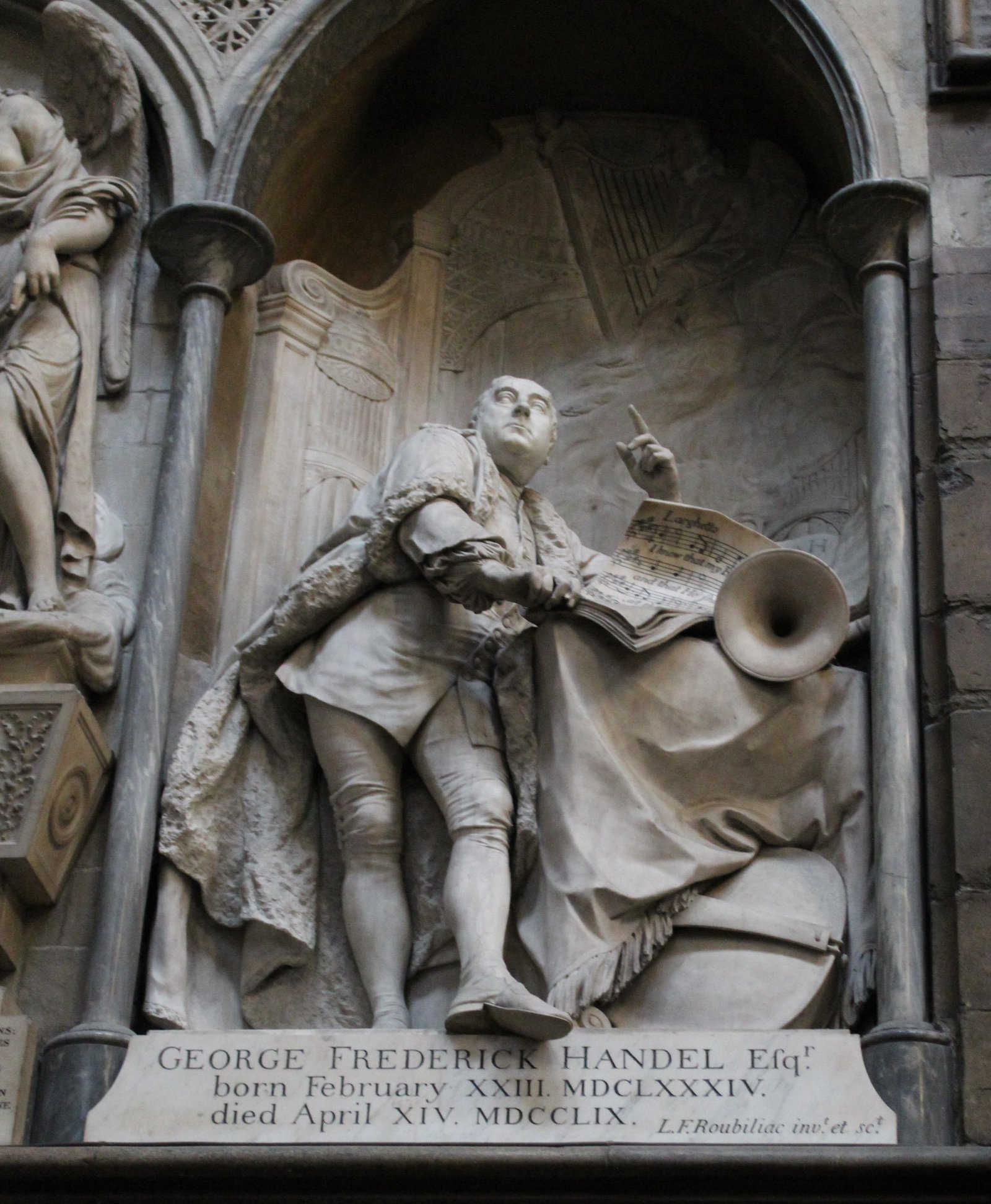
He was despised, and the wounds of the world
Part the Second opens in shadow and descends into the deepest music Handel ever wrote. After the chorus "Behold the Lamb of God" comes the emotional centre of the entire oratorio: the alto aria "He was despised and rejected of men," set in a slow, bare E-flat, the voice almost unaccompanied, each phrase falling into a silence that is itself expressive — the silence of one abandoned. In the middle section the music turns violent: "He gave his back to the smiters," the strings striking hard, dotted, lashing figures, the scourging rendered in sound. Then the opening returns, and the desolation with it. This is the aria that reduced a Dublin clergyman to crying out forgiveness over Susannah Cibber; it is Handel's supreme study in dignified suffering, and it asks of the singer not display but a kind of stricken restraint. Around it cluster the choruses that carry the theology of the Passion: "Surely he hath borne our griefs and carried our sorrows," heavy, halting, weighed down; "And with his stripes we are healed," a tight, austere fugue, its subject a chromatic line that seems to wince; and then the wandering of "All we like sheep."
What is remarkable is the restraint of it all. Handel, the master of operatic spectacle, sets the suffering of the Redeemer with an almost unbearable plainness — no rage, no melodrama, but a slow, exposed, grief-laden music that trusts the words and the silence between them. The man who wrote this had, by the 1740s, known physical collapse and public humiliation at first hand, and one hears it: the music does not describe sorrow from the outside but seems to speak from within it. Here, in the long shadow of Part the Second, Messiah earns the joy it will later claim. The Hallelujah means what it means only because it is preceded by this — by the despised and rejected man, set to music of such tenderness that the listener grieves before being permitted, at last, to rejoice.
All we like sheep
"All we like sheep have gone astray" is one of the wittiest and most profound strokes in the work, and another of the choruses that began life as a flirtatious Italian love duet. Handel takes the line "we have turned every one to his own way" with brilliant literalness: the voices scatter in every direction, running off in cheerful, wayward melismas, each part wandering its own path, the whole choir a flock of sheep ambling carelessly apart — a depiction of human waywardness so light and charming that we almost miss its meaning, which is sin. The music is delightful precisely because it refuses to moralise; it lets us hear how pleasant it is to go astray, each soul trotting happily after its own desire. And then, at the very end, everything changes. On the words "and the Lord hath laid on him the iniquity of us all," the scampering stops; the tempo drops; the harmony darkens into a slow, grave, chromatic descent, the whole weight of the world's wandering suddenly gathered and laid, in heavy chords, upon one.
It is a masterstroke of dramatic and theological compression. The lightness of going astray and the gravity of its cost are set side by side in a single chorus, the one flowing without a break into the other, so that the listener feels the turn from careless sin to its solemn reckoning in the body. That Handel built this from the runs of a love duet — secular music about the games lovers play — only deepens the point: the same human waywardness that animates a flirtation animates the straying of the sheep, and both are gathered up, in the end, into something graver. By now a pattern is unmistakable. Again and again the most sacred moments in Messiah are made of repurposed worldly material, theatrical craft turned to holy ends — which is, perhaps, the truest image of Handel's whole achievement: a man of the theatre who consecrated the theatre's art.
He trusted in God
In the midst of Part the Second, as the work contemplates the suffering of the Redeemer, Handel does the one thing the rest of Messiah studiously avoids: he lets the chorus become a character. "He trusted in God that he would deliver him; let him deliver him, if he delight in him" — these are the words of the crowd at the foot of the cross, the jeering of the mob, taken from Psalm 22 (the very psalm Christ quotes in his agony). And Handel sets them as a turba chorus — the Latin word for crowd, a device he inherited from the long tradition of Passion settings, in which the chorus plays the howling multitude. The music turns vicious. It is a double fugue, fast and angular, the mocking phrase chased through the voices in a snarl of counterpoint, the harmony biting and chromatic. After pages of consolation, the chorus suddenly spits. It is the most frightening music in the work, and the most dramatic — the one place where the contemplative oratorio breaks open and the listener is made not an observer of the Passion but a member of the crowd that mocks.
The dramatic force of this chorus depends on a kind of controlled violence — the entries must be hard, the counterpoint must crackle, the mockery must be felt — and it is the more shattering for arriving, in performance, hard on the heels of the work's most tender music, the alto's "He was despised." That juxtaposition, desolate beauty answered by collective cruelty, is the dramatic axis of Part the Second, and it lands with full force only when the singers commit to the ugliness of the mob. A polite Messiah fails here. What Handel asks of his chorus is to turn, for ninety seconds, into the worst of us — and the moral shock of a fine performance is that we recognise the voice. The crowd that mocks is not "them." Handel, who knew his Lutheran theology, places the listener inside the guilt; the turba is a mirror.
Hallelujah
And then, out of the darkness of the Passion, the most famous four minutes in choral music. The Hallelujah chorus crowns Part the Second — it celebrates not the resurrection (that comes in Part the Third) but the triumph of the reign of God, in words drawn from the Book of Revelation: "Hallelujah, for the Lord God omnipotent reigneth ... The kingdom of this world is become the kingdom of our Lord and of his Christ ... King of Kings, and Lord of Lords." The key is D major, Handel's key of trumpets and ceremony, and the trumpets and drums — held back for so long — now ride in glory. What makes the chorus a masterpiece, rather than merely loud, is the sheer variety of choral technique Handel packs into it and the speed with which he switches between them: the hammered homophony of the opening "Hallelujahs"; the bare, thrilling unison of "for the Lord God omnipotent reigneth"; the fugal energy of "and he shall reign for ever and ever"; and, at the climax, the most famous stroke of all — the sopranos holding "King of Kings, and Lord of Lords" on a rising sequence of long, blazing high notes, like a series of trumpet calls, while beneath them the lower voices keep up an urgent "for ever, hallelujah, for ever, hallelujah." Two ideas, two registers, sounding at once: the eternal held note above, the restless praise below. It is overwhelming by design.
Two things about the Hallelujah are worth saying against the grain of its over-familiarity. The first is that it is not, as audiences perennially assume, the finale; a third of the work still lies ahead. The displacement is telling — the Hallelujah celebrates the triumph of God's kingdom, but the work has not yet reached its true end, the resurrection of the dead and the eternal praise of the Lamb. The second is that the famous tradition of standing — supposedly begun by George II — can flatten a piece that is, in fact, a marvel of compositional architecture rather than a mere shout of joy. Heard in a chamber performance, with the lines clear and the trumpets period-toned rather than swollen, the Hallelujah recovers its intricacy: one hears the four distinct textures, the wit of the switches, the way the held soprano "King of Kings" is a deliberate suspension of motion against the churning praise below. It is not a wall of sound. It is a cathedral of counterpoint, built fast, and built to last.
The third part, and the promise
Part the Third is the shortest and, in its way, the most personal — it turns from the cosmic drama to the individual soul and its hope. It opens with what is perhaps the most beloved single aria in the work, the soprano's serene "I know that my Redeemer liveth" — the very words Roubiliac would carve into Handel's monument — a quiet, radiant statement of faith in resurrection set over a gently rocking accompaniment. From there the part builds its argument about the conquest of death: the great chorus "Since by man came death," alternating stark, slow, unaccompanied passages (death) with bright, surging ones (resurrection); the bass aria "The trumpet shall sound," with its long, ringing solo trumpet announcing that "the dead shall be raised incorruptible"; and the duet "O death, where is thy sting?" — itself, once again, reworked from an earlier Italian duet, the worldly made eternal. The theology is Pauline, drawn from the great resurrection chapter of First Corinthians, and the music grows steadily toward the final, overwhelming act of praise.
The trumpet shall sound
Before the final praise, Part the Third gives the bass his great moment, and it is one of Handel's boldest strokes. "The trumpet shall sound, and the dead shall be raised incorruptible" — the words are Paul's vision of the resurrection at the last day, and Handel sets them as a long, majestic aria built around a real, obbligato trumpet that converses with the singer as an equal partner. The trumpet announces; the bass answers; the two trade the figure back and forth across a broad, striding accompaniment, the brass blazing out the promise of the dead awakened. It is the only extended trumpet solo in the work, held back, like everything else, for maximum effect, and it places the instrument of judgement and resurrection at the very threshold of the work's close. There is a touch of the operatic aria di bravura about it — the form Handel had spent thirty years perfecting in the theatre — now turned to the announcement of eternal life.
Around it Part the Third completes its argument. The serene "I know that my Redeemer liveth" had opened the part with the soul's quiet certainty; the great chorus "Since by man came death" had set the bleak, unaccompanied chords of mortality against the bright surge of resurrection, Adam's death answered by Christ's life; and after the trumpet's promise comes the duet "O death, where is thy sting?" — taunting, almost dancing, the terror of death dissolved into something light and unafraid — leading to the chorus "But thanks be to God, who giveth us the victory." The theology is the boldest claim the work makes, and Handel matches it with his most confident music: not merely that suffering is real and comfort is coming, but that death itself — the last enemy, the thing every listener fears — is beaten, and that the proper response is not dread but a trumpet, and thanks. It is the necessary preparation for the final word.
Worthy is the Lamb, and the great Amen
The work ends as it must — not with the Hallelujah, but with something grander and stranger. "Worthy is the Lamb that was slain," the final chorus, is built in mounting sections drawn from Revelation: first a slow, majestic adoration of the slain Lamb; then a faster, surging "Blessing and honour, glory and power, be unto him"; and at last the crown of the entire work — the great "Amen" fugue. On a single word, Amen, Handel writes one of the supreme fugues in the choral repertoire: a long, striding subject entering voice by voice, low to high, building through ever denser counterpoint, the orchestra and trumpets joining the voices, until the whole edifice arrives at a final, blazing cadence and the work simply stops, its argument complete. To end a meditation on the Messiah not with a picture or a story but with a single word of assent, set as the most rigorous and exalted music in the entire score, is the final stroke of Jennens's design and Handel's genius together. Amen — so be it. The case rests; the soul agrees; and the agreement is sung as a fugue, the most intellectual of all musical forms turned, here, into an act of worship.
It is fitting that this closing word should also close the present account of the work in sound. The "Amen" fugue is the supreme test of a choir — the subject must be sung with shape and stride each time it enters, the texture must stay clear as it thickens, the long build must be paced so that the final cadence arrives as an arrival and not merely a stop — and it is here, in the finale, that the discipline of a first-rate chamber ensemble most fully repays itself.
In a performance at this scale and on these instruments, the "Amen" fugue recovers its true character — not a wash of festive sound but a piece of architecture rising in real time, each entry of the subject audible, the counterpoint a living conversation rather than a blur. The pacing matters above all, and Gary Graden's reading builds the long fugue with patience, letting the texture accumulate so that the final cadence — voices, strings, oboes, trumpets and drums together — lands as the summit of the whole two-hour ascent. Handel wrote SDG under this music. Heard like this, with the lines clear and the resonance of a cathedral around the final chord, one understands the inscription not as piety but as accuracy: he had built something that points beyond itself, and knew it. The case rests; and the music has made it better than any argument could.
Which Messiah? An unstable masterpiece
One peculiarity sets Messiah apart from almost every other canonical work and deserves to be understood: there is no single, fixed, authoritative version of it. Handel was a working man of the theatre, and he revised Messiah constantly across nearly twenty years of performances, reshaping it to fit the singers he had to hand. He transposed numbers up and down; he recomposed arias; he reassigned movements from one voice to another — "But who may abide" and "Thou art gone up on high" exist in strikingly different settings for different voice types; he wrote alternative versions of whole movements. The famous aria "Rejoice greatly" survives in both a swinging triple-time and a common-time form. What we call "Messiah" is therefore not a single frozen text but a family of versions, every performance of which makes choices among Handel's own competing solutions.
This fluidity is not a defect; it is a window into how Baroque music actually lived. A work was a script for performance, not a sacred relic, and Handel expected it to be remade for each occasion — which is precisely why the later cult of the single monumental "authentic" Messiah, performed by hundreds in fixed solemnity, would have puzzled him. He gave the Foundling Hospital a particular fair copy, and that has often been treated as a reference text, but he never stopped tinkering. For the performer this means that every account of Messiah — including a chamber-scaled Baroque one — is in part an act of editorial judgement, a choosing among Handel's own alternatives. The work's very instability is a kind of freedom, and a reminder that it was born not as a monument but as living, mutable theatre music, made and remade by a practical genius for the voices in the room.
The disappearance that never came
Most works of the eighteenth century vanished for a time after their composer's death, to be rediscovered, if at all, by later enthusiasts. Messiah is almost unique in that it never went away. From the Foundling Hospital benefits onward it was performed somewhere, every year, without interruption — a continuity unbroken from 1742 to this day. The publication of the score in 1767, eight years after Handel's death, spread it from the cathedral cities of England across the Atlantic to the American colonies. Where Bach's Passions slept for a century until Mendelssohn woke them, Messiah simply kept being sung. But its very survival had a strange consequence: cut loose from Handel's own modest forces, the work began to swell, and for a century and a half the Messiah that audiences knew grew further and further from the lean, two-oboe oratorio of Dublin.
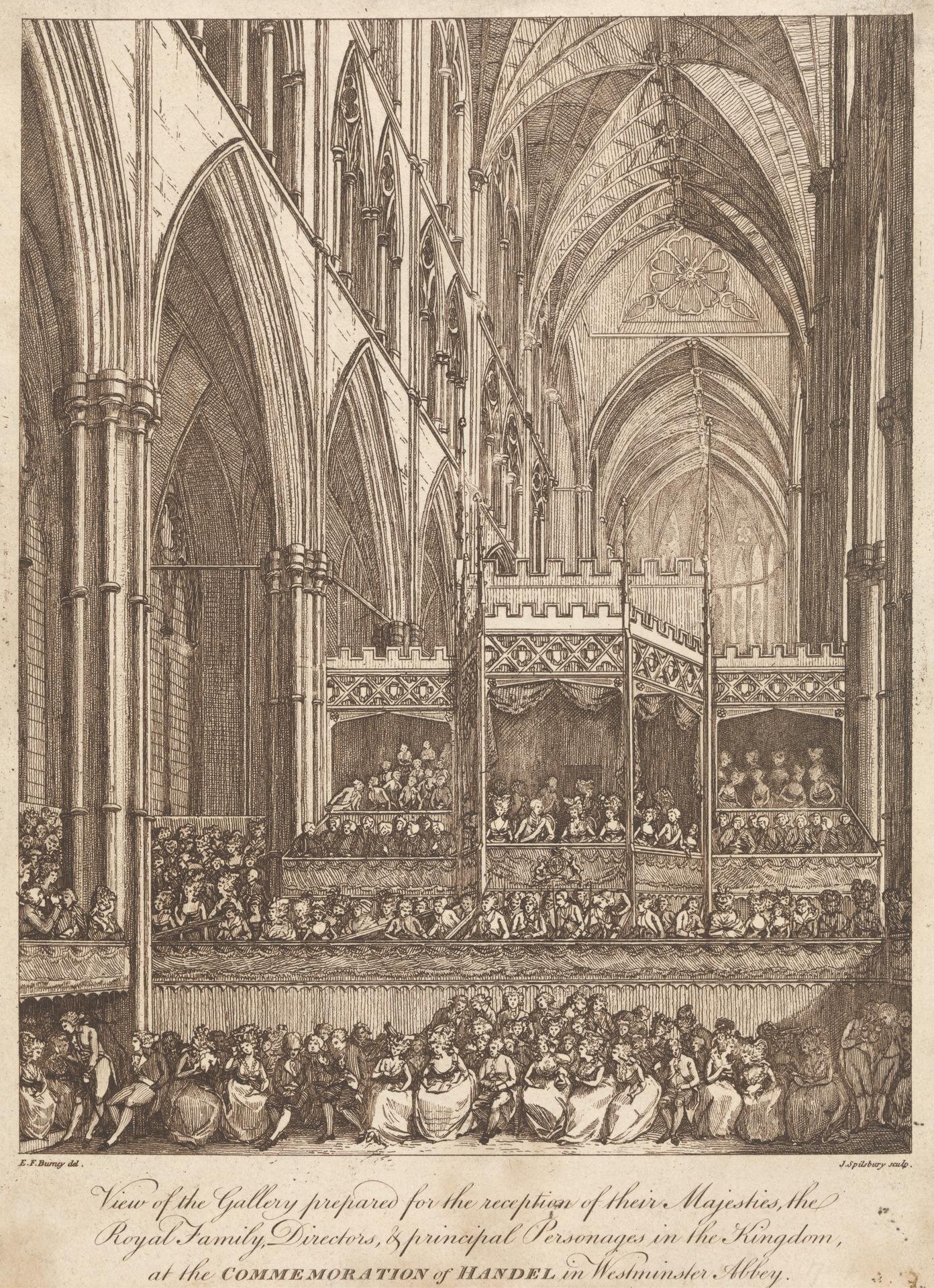
1784, and the age of the monster Messiah
The decisive moment came in 1784, the supposed centenary of Handel's birth (and the silver jubilee of his death), when a grand Handel Commemoration was mounted in Westminster Abbey under the patronage of George III. A plaque in the Abbey still records that the band consisted of five hundred and twenty-five vocal and instrumental performers — an unheard-of mass of sound, conducted by Joah Bates and chronicled in awed detail by the historian Charles Burney. The festival was a sensation; thousands fought to get in; it established a fashion that would only grow. Further commemorations followed, each larger; by 1791 over a thousand performers took part, with Haydn in the audience, amazed at the hold a dead composer kept over a nation. The pinnacle of gigantism came in the Victorian age at the Crystal Palace, where Messiah was performed by choirs of thousands and orchestras to match — the work transformed into a vast civic and imperial ritual, a sonic monument to Protestant Britain's idea of itself. On the Continent, meanwhile, the work was being remade in a different way: its spare Baroque scoring was felt to be thin, and arrangers added the fuller orchestral colours of a later age.
The verdict of genius
If the public made Messiah immortal, the composers made Handel a god. The generation of geniuses that followed him — the masters of the Classical age — regarded him with something close to awe, and it is striking how unanimous they were. Haydn, visiting London in the 1790s, attended the vast Handel commemorations in Westminster Abbey and was, by his own account, overwhelmed to tears; hearing the Hallelujah he is said to have wept and cried out that Handel was "the master of us all." The experience helped turn Haydn toward the oratorio himself, and his Creation is, in part, a child of that encounter. Mozart, who reorchestrated Messiah in 1789, bowed before it even as he retouched it: "Handel understands effect better than any of us," he said; "when he chooses, he strikes like a thunderbolt."
Beethoven's reverence was the deepest of all. He kept Handel's complete works — forty volumes — beside him, pored over them, and pronounced, more than once and in his own emphatic phrasing, that Handel was the greatest composer who ever lived: "Go and learn of him how to achieve great effects with simple means." On his deathbed, presented with a gift of the Handel scores, the dying Beethoven is reported to have pointed to them and said, "There is the truth." From a man not given to praising rivals, living or dead, it is an extraordinary verdict. The modern scholarly judgement, less ecstatic but no less admiring, was set down by Winton Dean: Handel was "not only a great composer; he was a dramatic genius of the first order." Three centuries on, with the gigantism stripped away and the work returned to something near its original scale, that older verdict of the composers — Haydn's tears, Mozart's thunderbolt, Beethoven's "truth" — seems only confirmed. They heard, in this music, a power they could not match and would not pretend to.
The return to Handel's own scale
The pendulum began to swing back only in the twentieth century. Scholars reconstructed Handel's own performing versions; conductors grew uneasy with the Victorian gigantism; and from the late 1970s the historically informed performance movement — period instruments, modest choirs, brisk Baroque tempi, the textures Handel actually wrote — restored the work to something near its original scale and spirit. The landmark recordings of that movement let listeners hear, often for the first time, how transparent and dramatic the music had always been under the accumulated plush. Today the two Messiahs coexist: the vast festival tradition, with its mass sing-alongs and its standing Hallelujah, and the lean, fleet, period-instrument account that returns the work to the chamber and the chapel. The history of how Messiah has been performed is, in miniature, the history of how three centuries have wanted to feel about God, charity, nation and death — each age remaking the same notes in its own image.
| Year | Event | What it marks |
|---|---|---|
| 1742 | Dublin premiere, Fishamble Street | Charity concert; ~30-voice choir; the work is born as an act of mercy |
| 1743 | London premiere as A New Sacred Oratorio | Controversy over sacred words in a playhouse; cool reception |
| 1750 | First Foundling Hospital benefit | The work finds its charitable home; annual performances begin |
| 1759 | Handel attends Messiah, dies 8 days later | His last music; bequeaths the score to the Foundling Hospital |
| 1767 | First published score | The work spreads across Britain and to America |
| 1784 | Handel Commemoration, Westminster Abbey | 525 performers; the age of the giant Messiah begins |
| 1789 | Mozart's Der Messias, Vienna | Re-orchestration for Classical-era forces; sung in German |
| 1859 | Crystal Palace centenary festival | Victorian gigantism; choirs of thousands |
| 1979– | Historically informed recordings | Return to period instruments and Handel's own scale |
| 2022 | Megaron Chamber Choir, Slovenia | First Slovenian performance with a Baroque orchestra; Koper and Ljubljana |
A Carniolan namesake
There is a small historical coincidence that gives the arrival of Handel's Messiah in Slovenia an unexpected resonance, and it is worth a paragraph. A century and a half before Handel, the lands that are now Slovenia produced one of the great masters of Renaissance sacred polyphony — Jacobus Gallus, born around 1550 in Carniola and known in his own German-speaking world as Jacob Handl. The names are all but identical: Handl, Händel, Handel — the same root, the same family of spellings, separated by a hundred and fifty years and a world of style. Gallus, who spent his career in Bohemia and Austria and died in Prague in 1591, left a vast body of motets and masses — his Opus musicum, a cycle of motets for the entire church year, is among the monuments of late-Renaissance music — and he is claimed, rightly, as the first composer of genius to come from the Slovenian lands. That the most beloved sacred work of the great Handel should at last be sung in Slovenia in the manner of its own age, by a choir drawn from a tradition that reaches back to the polyphony of Handl, is the kind of rhyme that history occasionally offers and that a musician cannot help but enjoy.
It is more than a pun. It points to something real: that the Slovenian lands have a deep and continuous tradition of choral and sacred music, from Gallus through the Baroque and Romantic centuries to the extraordinary flowering of Slovenian choral singing in our own time, which is, per head of population, among the richest in Europe. A great chamber choir capable of singing Messiah on Handel's own terms does not appear from nowhere; it stands at the end of a long line. When the Megaron Chamber Choir gave the first Slovenian Messiah with a Baroque orchestra in 2022, it was not importing an alien masterpiece into barren ground. It was bringing a cousin home — setting the sacred music of Handel beside the inheritance of Handl, in a country that has been singing this kind of music, in its churches and its concert halls, for four hundred years.
Messiah in Slovenia, and a cathedral in Koper
Which brings this essay home, and to the performance that has accompanied it. Messiah has long been loved in Slovenia, where it is known as Mesija and called, with affection, the "oratorio of oratorios"; it returns to Slovenian concert halls most years, often in the candle-lit weeks of Advent. But for all that history, the work had never been heard in Slovenia as Handel himself would have known it — sung by a chamber choir, accompanied by a Baroque orchestra on period instruments, at the human scale of the Dublin première rather than the inherited Romantic mass. That distinction was crossed in November 2022, when the Megaron Chamber Choir gave what was the first Slovenian performance of Messiah with a Baroque orchestra — in the cathedral at Koper, and then in the hall of the Slovenian Philharmonic in Ljubljana. It is the Koper and Ljubljana account, filmed and produced by the present writer, that the recordings throughout this essay are drawn from. To hear the work in the long, generous acoustic of a stone cathedral, sung by a choir of Handel's own dimensions, is to hear it nearly as 1742 heard it — and to understand why the music never needed the plush that later ages laid upon it.
There is a deeper point in this homecoming than local pride. To return Messiah to a chamber choir and a Baroque band is not merely an antiquarian gesture; it is an interpretive argument about the work's nature. Handel secured, as one scholar put it, "a balance between soloists and chorus which he never surpassed" — a balance audible only when the chorus is small enough that its lines stay clear and its words intelligible, and the orchestra light enough to converse with the voices rather than cover them. The transparency this essay has kept pointing to — the four ideas of "And the glory," the flickering runs of "And he shall purify," the entries of the "Amen" fugue — is not a connoisseur's luxury. It is how the music means. A Messiah of Handel's own scale lets the listener hear the argument that Jennens built and Handel set: prophecy, suffering, and the conquest of death, carried by a community of voices rather than a wall of them.
Megaron, and how a film carried Messiah into the world
Here this essay comes finally to rest where its music began — in an act that reaches out to people. For the filmed account of this performance did not merely document a concert in the cathedral of Koper and the hall of the Slovenian Philharmonic; it gave that performance a second life and an audience Handel could never have imagined. Charles King called Messiah a "message in a bottle" that each generation has found addressed to itself; in this production the bottle at last drifted out to listeners across the world the great Saxon master could never have reached.
The numbers speak for themselves. The recordings of this performance have gathered hundreds of thousands of views online: the chorus "For unto us a Child is born" alone drew around half a million, while "Amen" and "Worthy is the Lamb" reached a quarter of a million within three months of release — and the comments, from listeners the world over, overflow with praise for the choir. This is no small thing. Handel's "Comfort ye," addressed to a people in exile, reaches three centuries on an audience the size of a nation — not in a concert hall, but on a screen, wherever anyone presses play.
And the choir earns that praise. The Megaron Chamber Choir, founded in 2003 by the composer and conductor Damijan Močnik from singers drawn out of the choral pyramid of St Stanislav's Institute, has in two decades become one of the most decorated of Slovenian ensembles — with a rich, recognisable sound and exciting interpretations. It was named best among the mixed choirs at the prestigious international competition at Marktoberdorf in 2022, taking two further special prizes for the set work and the best programme; it won the golden plaque and the award for the best performance of twentieth-century music at Naša pesem, an excellent third place at the international Gallus competition in Maribor, and, for its twentieth anniversary, the Gallus Plaque for artistic excellence. It has toured from Cleveland to New York and sung under the batons of Gergiev, Nott and Martina Batič, with the Munich Symphony and the Slovenian Philharmonic Orchestra.
Two large names stand behind it. Močnik is today among the most frequently performed living Slovenian composers abroad — his works sung by the RIAS Kammerchor of Berlin, the Swedish Radio Choir, the SWR Vokalensemble and the Choir of Radio France — and a laureate of the 2022 Prešeren Fund Prize. Gary Graden is an heir to the great school of Eric Ericson, the Swedish tradition of blend and transparency that is precisely what Handel at chamber scale demands: every line audible, the counterpoint a living conversation rather than a blur. To unite such a choir, such a school, and a Baroque orchestra on period instruments is to hear Messiah as it was conceived.
And that is the living proof of everything this essay has argued. Returned to its true scale and carried by a film of real beauty, Messiah still reaches out and seizes — not ten listeners, but hundreds of thousands. In this production the Dublin hall of 1742 and the Koper cathedral of 2022 meet the global audience of now; the work that was born to free debtors and console a grieving city goes on consoling, a quarter-million at a time. "Every valley shall be exalted" — and the valley is exalted again, on a screen, for whoever presses play.
- Oratorio
- A large sacred work for soloists, chorus and orchestra, sung without staging, costume or scenery — like an opera for the ear. Handel essentially created the English oratorio as a genre.
- Recitative
- Sung speech that carries the narrative or text; "secco" (dry) recitative is accompanied only by continuo, "accompagnato" by the full strings, used for heightened moments such as "Comfort ye."
- Da capo aria
- The standard Baroque aria in ternary (A–B–A) form, the return ornamented by the singer. The form of Italian opera seria, which oratorio's choruses partly displaced.
- Melisma
- Many notes sung to a single syllable. Handel's florid choral melismas — on "purify," on "born" — are among the glories and the technical hazards of Messiah.
- Turba
- Latin for "crowd": a chorus that voices a character, especially the jeering multitude of the Passion. "He trusted in God" is Messiah's great turba.
- French overture
- A Baroque overture in two sections — a slow, dotted, ceremonial opening followed by a quick fugal passage. Handel's "Sinfony" opens Messiah in this stately form.
- Basso continuo
- The Baroque accompanimental foundation — a bass line realised in chords on harpsichord or organ with cello — over which the music is built.
- Coloratura
- Elaborate, agile vocal ornamentation; the running figuration that Handel, here, repurposed from secular Italian duets to sacred ends.
- Soli Deo Gloria
- "To God alone the glory" — the Latin inscription (SDG) Handel wrote at the end of the Messiah autograph, a reflex shared with Bach.
- HWV
- Händel-Werke-Verzeichnis, the catalogue of Handel's works. Messiah is HWV 56.
Messiah everywhere
It is worth pausing on the sheer scale of what this one work became, because nothing else in classical music quite matches it. Messiah is very probably the most frequently performed large-scale composition in the history of Western music. For more than two and a half centuries it has been sung every year without interruption, and today, in the weeks around Christmas and Easter, it is performed thousands of times across the world in a single season — by professional orchestras and village choral societies, in cathedrals and school halls, in English and German and a dozen other tongues. It spread to the American colonies within Handel's lifetime and became, in the English-speaking world, a fixture of communal musical life so deep that whole traditions grew up around it: the "sing-along" or "scratch" Messiah, in which an audience of amateurs simply stands and sings the choruses together, is a ritual unto itself, and the custom of rising for the Hallelujah persists in concert halls that have long forgotten its supposed royal origin.
The Hallelujah chorus in particular has escaped the work entirely and entered the general culture — heard in films, advertisements, flash-mobs in shopping centres, and a thousand secular contexts where its four minutes of D-major jubilation stand simply for triumph and joy. Few pieces of art of any kind have so thoroughly saturated a civilisation's sense of the festive and the sacred at once. And yet, remarkably, the saturation has not worn the music out. Stripped of its accretions and returned to Handel's scale — as in the account that has accompanied this essay — Messiah still does to a fresh listener exactly what it did in Fishamble Street in 1742. The familiarity is a kind of miracle in reverse: a work performed past the point where any other would have become wallpaper, and which nonetheless, the moment the strings begin and the tenor sings "Comfort," reaches out and takes hold. That is the final measure of its greatness — not that it is famous, but that its fame has not been able to diminish it.
Why we still listen
What, in the end, accounts for the strange, unbroken hold of this one work — performed every year for nearly three centuries, in cities Handel never imagined, by believers and unbelievers alike? Part of the answer is the music's sheer adaptability: it has survived being whispered by a Dublin chamber choir and bellowed by four thousand Victorians, re-orchestrated by Mozart and stripped back by the period-instrument movement, sung in English and German and beyond, and it has never failed to move. But the deeper answer lies in what it is about. Messiah takes the oldest and hardest human questions — Is there comfort? Is suffering the last word? Does death win? — and answers them not with argument but with sound, in music of such confidence and beauty that, for the duration of a performance, the answer seems self-evidently yes. Charles King has called the work "a kind of message in a bottle" that every generation has felt was addressed to it. Part of the answer, too, is that the work has always spoken past its own theology. One need not share Jennens's beliefs, or any beliefs, to be seized by this music — and millions who do not have been. The questions it raises are older and wider than any creed: whether there is comfort to set against grief, whether suffering and death are the final word about a human life. Messiah does not argue these questions so much as enact an answer to them, in sound of such generosity that, for as long as the music lasts, the answer feels less like a doctrine than like a fact about the world. Believers hear their faith confirmed; unbelievers hear, at least, the most beautiful expression that faith has ever been given, and something in them answers it. The work is large enough to hold both. That is exactly right, and it is why a Slovenian cathedral in 2022, no less than a Dublin music hall in 1742, finds the same thing waiting in the same notes: the rumour, made gloriously audible, that the valley shall be exalted and the rough places made plain.
For further reading
The standard modern authority is Donald Burrows, whose Handel: Messiah (Cambridge Music Handbooks) and biography Handel anchor all serious study of the work; Burrows and Martha Ronish's Catalogue of Handel's Musical Autographs documents the sources.
On the libretto and its purpose, the essential work is Ruth Smith, Handel's Oratorios and Eighteenth-Century Thought, which transformed our understanding of Jennens; the theological design is studied in detail in Tassilo Erhardt, Händels Messiah: Text, Musik, Theologie. Watkins Shaw's A Textual and Historical Companion to Handel's Messiah remains valuable.
For the world around the work, Jane Glover, Handel in London: The Making of a Genius, is a vivid recent account, and Charles King, Every Valley: The Desperate Lives and Troubled Times That Made Handel's Messiah, sets the oratorio against the darkness of its London. Richard Luckett, Handel's Messiah: A Celebration, is a fine single-volume study. On Handel's place in the broader story, see the relevant chapters of Richard Taruskin, The Oxford History of Western Music, and Thomas McGeary, The Politics of Opera in Handel's Britain, for the political backdrop of the opera wars.
For the music as drama, the indispensable book remains Winton Dean, Handel's Dramatic Oratorios and Masques, whose verdict still stands: Handel was "not only a great composer; he was a dramatic genius of the first order."
Three centuries after a German in London set a quarrelsome Englishman's collection of Bible verses to music, the same notes still do the same work — in a Dublin music hall in 1742, in a Slovenian cathedral in 2022, the rumour made gloriously audible that the valley shall be exalted and the rough places made plain. Soli Deo Gloria — and the music has made the case better than any argument could. To return it to a chamber choir and the instruments of its own age, as the Megaron account does under Gary Graden, is not to make the work smaller but to let it speak again in its first and human voice.
A note when a new essay or travelogue appears. No noise, unsubscribe in one click.